When you're on the hunt for the right Cell Homogeniser, it’s really important to understand what you actually need. The market for these devices is growing pretty quickly—it's expected to grow at a compound annual growth rate of about 5.3%, and by 2025, it's projected to hit around half a billion dollars (Market Research Future). That’s a clear sign that researchers and companies are counting more and more on cell homogenization in biotech and pharma projects.
Dr. Emily Carter, who’s pretty well-known in cellular tech circles, often says, 'Picking the right Cell Homogeniser can really make or break your results.' Her point hits home—making sure your equipment matches what you're trying to achieve is key. Things like how fast it runs, the pressure it can handle, and how much sample you can process—all those little details really matter for whether your experiment succeeds or fails.
It’s easy for folks to overlook these things, though. People tend to focus on the cost, but understanding what the equipment actually does and whether it fits your needs is just as important. Taking the time to evaluate your options and understand their implications can make a huge difference in getting reliable, repeatable results. As this field keeps evolving, knowing what to look for and making informed choices can really help take your research to the next level.

Key Factors to Consider When Selecting a Cell Homogeniser
Selecting the right cell homogeniser is crucial for effective research. One key factor is the sample type. Different samples require unique approaches. For example, soft tissues may need a gentle touch, while hard samples demand more power. Understanding your sample ensures optimal results.
Another important aspect is the volume capacity. If you're working with small samples, a smaller homogeniser might suffice. For larger batches, consider a model with a higher capacity. Additionally, noise levels and ease of use can impact your work environment. A quieter homogeniser may contribute to a more pleasant lab experience.
It's also essential to evaluate durability and maintenance requirements. Robust models may withstand daily use better. However, they might be heavier and harder to clean. Finding a balance between performance and practicality is vital. Reflecting on your laboratory's specific needs can guide you in making the best choice.
Different Types of Cell Homogenisers and Their Functions
When selecting a cell homogeniser, understanding the different types is crucial. Cell homogenisers can generally be classified into three main categories: mechanical, mortar-and-pestle, and ultrasonic homogenisers. Each type plays a unique role in breaking down cell structures. Mechanical homogenisers utilize blades or beads to disrupt cells rapidly. This approach is often effective for tougher cell types, providing consistency across samples.
Mortar-and-pestle homogenisers, while traditional, offer exceptional control. Users can adjust their technique, impacting the extraction process. This method may allow for better preservation of sensitive compounds. Ultrasonic homogenisers utilize sound waves to create intense cavitation, leading to the rapid disruption of cells. Studies have shown that ultrasonic methods can improve extraction rates by 20-30% in certain applications, making them valuable in research settings.
It’s essential to consider your specific needs. For example, if your work involves fragile cells, a mechanical homogeniser might not yield the desired results. A skilled user must assess the equipment's capabilities against the required outcomes. Research indicates that optimal results often vary based on the cell type and the homogenising method chosen. The best homogeniser isn’t always the most powerful; it’s the one that aligns closely with your overall goals.
Assessing Sample Volume and Type for Your Homogenisation Needs
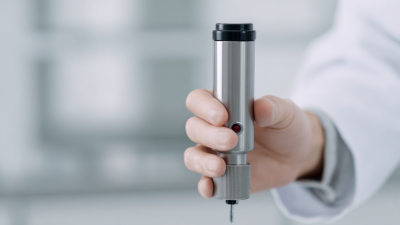
Choosing the right cell homogeniser begins with understanding your sample volume and type. Different applications require specific homogenisers tailored to the unique characteristics of your samples. For small volumes, a handheld homogeniser may suffice. However, for larger batches, a more robust solution is necessary. Assess how much material you need to process per run, as this will influence your decision significantly.
Additionally, consider the consistency of your samples. For instance, tough tissue samples demand a powerful homogeniser that provides sufficient shear forces. Conversely, softer samples may only need gentle agitation. Analyze your sample's composition to identify the right equipment. Achieving the desired homogenisation often involves trial and error.
It’s essential to assess the variables that affect homogenisation efficiency. Using a homogeniser that cannot adapt to varying sample types can lead to inconsistent results. For researchers, understanding these dynamics is key. Each experiment teaches you more about the process, guiding you towards a better choice. Through constant reflection on your equipment's performance, you can optimize your workflow.
Understanding the Importance of Speed and Efficiency in Homogenisers
When choosing a cell homogeniser, speed and efficiency are critical factors to consider. A homogeniser’s speed directly affects the homogenization process. Higher speeds can break down cell structures more effectively. This efficiency translates into better sample quality. A well-homogenised sample will yield more reliable results in your experiments. It is vital to select a model that meets the demands of your research, even if that may mean additional costs or complexity.
Efficiency also relates to energy consumption and time savings. An efficient homogeniser can process samples quickly, allowing for more experiments in a shorter time frame. However, this does not mean that faster is always better. You may need to experiment with different speeds for various cell types. Careful attention to this balance is essential. An overzealous approach could compromise sample integrity. Therefore, understanding your specific needs is crucial for achieving optimum results. Always evaluate the homogenisation requirement before making a decision.
Evaluating Material Compatibility for Optimal Homogenisation Results
When selecting a cell homogeniser, material compatibility is crucial for achieving optimal homogenisation results. Different cell types require specific approaches. For instance, mammalian cells tend to be more fragile compared to bacterial cells. Choosing the right materials for the homogeniser can significantly enhance the quality of your samples and ensure the integrity of biological components.
Many industry reports suggest that using stainless steel or glass components is favorable due to their inert nature. A study from the Journal of Biotechnology highlighted that stainless steel withstands various solvents and conditions better than others. However, one must also consider the potential for mechanical shear forces that can damage sensitive cellular structures. Each material type interacts differently under specific homogenisation processes, so users should evaluate whether their chosen homogeniser aligns with their sample type.
Tip: Always test homogenisation on a small scale before proceeding to larger batches. This can prevent costly losses of valuable samples. Additionally, consider the ease of cleaning and maintenance of the homogeniser. Some materials may present challenges post-use, affecting future experiments. Pay attention to these details to avoid common pitfalls that can lead to reproducibility issues in research.
Budget Considerations and Cost-Effectiveness in Cell Homogenisers
Choosing a cell homogeniser often requires careful consideration of budget and cost-effectiveness. The initial investment can vary significantly based on features and capabilities. Evaluating your specific needs is crucial. For instance, high-throughput models may seem advantageous for busy labs, yet they often come with a hefty price tag. Sometimes, a simpler machine can do the job just as well for a fraction of the cost.
Don’t overlook long-term expenses like maintenance and consumables. These costs can add up over time, influencing your overall budget. Investigate the reliability of each model. Some machines carry hidden costs due to frequent repairs or replacements. It is essential to find a balance between functionality and affordability. Look for reviews that highlight both performance and user experiences with potential issues.
Making an informed choice often requires reflection on your lab’s unique demands. What are your primary applications? Is there room for growth in your budget? By analyzing your specific situation, you can pinpoint a solution that meets your needs without overspending. Quality and value should go hand in hand, ensuring every dollar spent contributes to effective research outcomes.
User-Friendly Features and Maintenance Requirements for Longevity
Choosing a cell homogeniser can be challenging. User-friendly features are crucial for efficient operation. Ease of use impacts productivity and reduces errors in research. Many professionals highlight the importance of straightforward controls and clear displays. A recent survey in laboratory equipment found that 75% of users prefer devices with intuitive interfaces. This preference can lead to quicker training for new staff.
Maintenance is equally important for the longevity of homogenisers. Regular cleaning and servicing can prevent malfunctions. Industry guidelines suggest a monthly deep cleaning for optimal performance. Lack of maintenance is a common issue. A study revealed that 30% of homogenisers fail due to insufficient upkeep. Consider units with washable parts to simplify cleaning.
Tips for maintenance include establishing a routine. Schedule regular checks on seals and blades. Pay attention to signs of wear and tear. Using appropriate lubricants can extend the lifespan of moving parts. Investing time in proper care pays off. It enhances reliability and ensures consistent results in your experiments.
FAQS
: The three main types are mechanical, mortar-and-pestle, and ultrasonic homogenisers. Each type serves a different purpose.
Mechanical homogenisers use blades or beads to rapidly disrupt cells. They are suitable for tougher cell types.
They provide exceptional control over the extraction process. This method can preserve sensitive compounds better than others.
They use sound waves to create cavitation, leading to rapid cell disruption. This can improve extraction rates significantly.
Very important. Different cell types require specific material considerations for optimal results and sample integrity.
Stainless steel and glass are preferred due to their inert properties. They withstand various conditions effectively.
Always test on a small scale first. This helps prevent costly losses of valuable samples during larger processes.
Some materials may pose challenges after use. Poor maintenance can affect future experiments and reproducibility.
Using a mechanical homogeniser might not yield good results for fragile cells. Choose methods that match the cell type.
Not necessarily. The best homogeniser is one that aligns with your specific goals and sample requirements.
Conclusion
When selecting a Cell Homogeniser, several key factors must be considered to ensure optimal performance for specific laboratory needs. Understanding the different types of homogenisers and their functions is crucial, as well as assessing the sample volume and type you will be working with. Speed and efficiency are significant attributes that can affect the quality of homogenisation, while compatibility with the materials being used is essential for achieving the best results.
Additionally, budget considerations play a vital role in the selection process, ensuring that the chosen Cell Homogeniser is both cost-effective and functional. User-friendly features and the maintenance requirements are equally important to guarantee longevity and ease of use in the laboratory. By carefully evaluating these aspects, one can select the most suitable Cell Homogeniser that meets their specific research objectives.