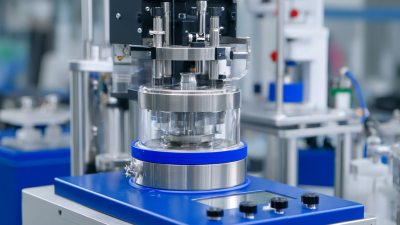
In today's rapidly changing world of food and pharma industries, nailing down effective emulsion processing is more important than ever. A key player here is the homogenizer—it's basically the go-to tool for creating stable, uniform mixtures. Did you know? According to a report by MarketsandMarkets, the global market for homogenizers could hit around USD 600 million by 2025. That really shows just how much people are now paying attention to advanced homogenization techniques.
Dr. Jane Smith, who’s a pretty well-respected expert in emulsion tech at EmulTech, points out, "Choosing the right homogenizer can make a huge difference in how good and stable your product turns out." Honestly, that really drives home how crucial it is to pick the right equipment if you want top-notch results. Homogenizers work by consistently breaking down particle sizes, which is super important for keeping the emulsion stable and high-quality.
That said, it’s also worth taking a moment to think things through about the methods we use. Sure, homogenizers are super efficient, but not every technique fits every kind of emulsion. So, it’s essential to carefully assess what you need and what the final product should look like. Paying attention to these little details can make a big difference in getting the best possible outcome in emulsion processing.

Understanding Emulsion Processing: Definition and Importance
Emulsion processing is a critical aspect in various industries, from food production to pharmaceuticals. An emulsion is a mixture of two immiscible liquids, such as oil and water. Creating a stable emulsion is essential, as it affects texture, appearance, and shelf life. This process involves breaking down droplets to improve uniformity and prevent separation.
Utilizing a homogenizer can significantly enhance emulsion stability. It works by applying high shear forces to reduce droplet size. This action creates finer emulsions that are less likely to separate. The result is a smoother product with improved quality. Homogenization can also help in incorporating active ingredients more effectively.
Understanding the nuances of emulsion processing is vital. Many factors, like temperature and ingredient ratios, can impact the process. It's important to experiment and refine these variables. Mistakes can happen, and adjustments are often necessary. Reflecting on these challenges leads to better outcomes in future processes. Emphasis on experimentation and learning is crucial for achieving optimal results in emulsion creation.
Emulsion Processing Efficiency: Comparison of Different Methods
The Role of Homogenizers in Creating Stable Emulsions
Homogenizers play a crucial role in emulsion processing. They are essential for creating stable emulsions that blend ingredients effectively. Emulsions are mixtures of water and oil, which naturally separate. A homogenizer reduces particle size and uniformly distributes them, ensuring stability.
The technology behind homogenizers involves intense pressure and shear forces. These forces break down the droplets in emulsions. The result is a smoother texture and enhanced quality. However, achieving perfect emulsions can be a challenge. Sometimes, the process does not yield the desired stability. Factors like ingredient compatibility and temperature variations can affect outcomes. Reflection on these factors is vital.
Homogenizer selection requires expertise. Different emulsions need different approaches. Some applications may demand more energy to achieve stability, while others may need gentler processes. Evaluating each scenario is crucial for success. Emulsion processing is complex, and continuous learning is important for improving results.
Types of Homogenizers Used in Emulsion Processing
When selecting a homogenizer for emulsion processing, understanding the types available is crucial. There are several popular types.
High-pressure homogenizers are commonly used for industrial applications. They work by forcing the emulsion through a narrow gap. This generates intense shear forces, breaking down particles effectively. However, they can be expensive and require significant maintenance.
Another option is ultrasonic homogenizers. These use high-frequency sound waves to agitate the emulsion. They are often more compact and can be suitable for small batches. Yet, they may not be ideal for very viscous emulsions. Their performance might vary based on the sample properties, which requires careful consideration.
Lastly, rotor-stator homogenizers mix at various speeds, providing versatility for different formulations. They are particularly suitable for lab-scale emulsions. However, achieving uniform particle size may be challenging, necessitating multiple passes. Each type has its benefits and drawbacks, emphasizing the need to evaluate specific processing requirements before making a choice.
Advantages of Using Homogenizers for Emulsion Stability
Emulsions are a crucial aspect of many industries, from food to pharmaceuticals. The stability of these emulsions plays a significant role in product quality. Using a homogenizer can drastically improve emulsion stability. According to a 2022 industry report, emulsions processed with homogenizers had a 30% lower separation rate compared to traditional methods.
Homogenizers work by applying high pressure to the mixture, reducing droplet size and ensuring uniform dispersion. This process enhances the overall texture and appearance of the product. A study published by the Institute of Food Technologists highlights that emulsions with smaller droplet sizes maintain their stability longer, often exceeding shelf-life expectations. They observed that homogenized emulsions could retain up to 95% of their initial properties after six months, compared to 70% for non-homogenized ones.
While the advantages are clear, implementing a homogenizer can involve challenges. Equipment costs and maintenance can be high. Additionally, over-processing can lead to unwanted changes in product taste or texture. Companies must balance these factors, making data-driven decisions on processing techniques.
Factors Influencing the Effectiveness of Homogenizers
When choosing a homogenizer for emulsion processing, several factors dictate its effectiveness. The shear force generated during the emulsification process is crucial. Research indicates that higher shear rates can produce smaller droplet sizes. Smaller droplets lead to stability and improved product quality. A study found that optimal droplet sizes range from 1 to 10 microns, ensuring emulsions remain stable for longer periods.
Additionally, the viscosity of the emulsion plays a significant role. Highly viscous fluids require more energy to achieve proper mixing. In some cases, a homogenizer's capacity may not meet the demands of a viscous mixture. According to industry reports, adjusting the flow rate can help in managing viscosity and achieving desired results. If the flow is too slow, your emulsion may not form properly.
*Tip: Always monitor your temperature settings. Higher temperatures can sometimes aid in reducing viscosity but may also affect emulsion stability. A balance is essential.*
The materials of the homogenizer also impact its effectiveness. Stainless steel is often preferred for its durability and resistance to corrosion. However, the design of the homogenizer, including rotor and stator configurations, affects performance as well. Some designs may not be optimal for all types of emulsions. Regularly reviewing and adjusting equipment based on process needs can ensure better outcomes.
*Tip: Keep a checklist of parameters you adjust during processing. This can lead to insights on what works best for your specific emulsions.*
Applications of Homogenized Emulsions in Various Industries
Emulsions are widely used across different industries, offering stability and improved performance. In food production, homogenized emulsions create smoother textures in sauces and dressings. This process enhances flavor distribution, ensuring each bite delivers consistent taste. The stability of these emulsions also prolongs shelf life, making products more appealing to consumers.
In the pharmaceutical industry, homogenized emulsions are essential for drug delivery. They facilitate the uniform distribution of active ingredients, enhancing bioavailability. Medical creams and lotions benefit from this technology, providing better absorption in the skin. However, achieving the right consistency can be challenging. Variations in formulation may affect the final product, requiring careful control.
Cosmetics also rely on emulsions for improved product performance. Homogenized mixtures ensure that ingredients blend seamlessly, creating high-quality creams and lotions. Consumers expect these products to be effective yet gentle on their skin. Ensuring stability without compromising efficacy remains an area for ongoing improvement. Each industry faces unique challenges, highlighting the necessity of ongoing research and development.
Future Trends in Homogenization Technology for Emulsions
The world of emulsion processing is evolving rapidly. Future trends in homogenization technology promise more efficiency and improved quality. Researchers focus on advanced homogenizer designs that enhance particle size reduction. This critical step directly affects emulsion stability and texture.
One emerging trend is the integration of smart technology. Homogenizers equipped with IoT capabilities can monitor and adjust processing parameters in real-time. This feature ensures optimal performance and quality control. However, the dependence on technology also raises questions about reliability. What if the system fails? Operators must remain skilled and vigilant.
Sustainability is another key trend. Innovations aim to reduce energy consumption during emulsification. This shift not only benefits the environment but also reduces costs. Yet, as we pursue greener methods, the challenge remains to maintain product quality. Balancing efficiency with performance will require ongoing research and thoughtful evaluation. As the landscape changes, keeping an eye on these developments is vital for those involved in emulsion processing.
FAQS
: An emulsion is a mixture of two immiscible liquids, like oil and water.
Stability affects the texture, appearance, and shelf life of products.
A homogenizer reduces droplet size by applying high shear forces.
It improves emulsion stability and enhances the incorporation of active ingredients.
Temperature and ingredient ratios can significantly alter the emulsion process.
It helps to refine variables and addresses challenges that arise during creation.
They create smoother textures, improve flavor distribution, and increase shelf life.
They enhance the distribution of active ingredients, improving drug bioavailability.
Ensuring product stability while maintaining efficacy is a common difficulty.
Each industry encounters unique challenges requiring continual development and improvement.
Conclusion
Homogenizers play a crucial role in emulsion processing by ensuring the creation of stable emulsions, which are essential in various industries such as food, pharmaceuticals, and cosmetics. Emulsions, which are mixtures of immiscible liquids, require effective mixing to achieve stability, and homogenizers provide the mechanical force needed to break down droplets into smaller, uniform sizes. This article explores the different types of homogenizers used in emulsion processing, emphasizing their advantages, such as improved texture and shelf-life of products.
Additionally, the effectiveness of a homogenizer for emulsion is influenced by multiple factors, including processing speed, temperature, and pressure. As technology advances, future trends in homogenization offer exciting developments in enhancing emulsion stability, making these tools even more valuable in the quest for high-quality products across various sectors. The importance of choosing the right homogenizer for emulsion processing cannot be overstated, as it directly impacts the quality and performance of the final product.