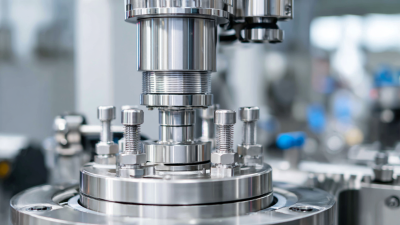
In the fast-paced world of food and beverage manufacturing, having a dependable Pressure Homogenizer really isn’t something you can overlook. I came across a report from Research and Markets, and it’s pretty striking—by 2026, the global market for homogenizers is expected to hit around $4 billion. That just shows how much people want efficient, reliable processing equipment these days. Big players like GEA Group and Scherzer have pointed out that the latest advancements in pressure homogenization actually help improve product quality and keep everything stable.
When you’re picking out a Pressure Homogenizer, there are a few things you really need to think about. Things like how efficient the machine is, how much energy it uses, and how much it’ll cost to keep it up and running. For example, some of the better models can cut down processing times by up to 40%, which is a huge boost for productivity. But here’s the catch—many folks tend to overlook regular maintenance, and that usually ends up costing more in the long run.
It’s also super important to understand exactly what you’re going to use the homogenizer for. Are you working with dairy products? Or maybe pharmaceuticals? One size definitely doesn’t fit all, and the machine needs to match your specific needs. Even with all the recent tech improvements, it’s smart to keep reflecting on your choices and make sure you’re doing what’s best for your unique situation.

Key Features to Consider in Pressure Homogenizers
When selecting a pressure homogenizer, certain key features stand out. Homogenization pressure is crucial. Data shows that operating at pressures above 200 MPa can significantly improve product stability and shelf life. This is vital for industries handling emulsions, like food or pharmaceuticals. A machine that offers adjustable pressure settings allows for greater flexibility in processing various materials.
Another essential aspect is the design of the homogenizing chamber. The size and shape of this chamber impact the flow dynamics. A well-designed chamber enhances shear forces, ensuring thorough homogenization. Reports indicate that machines with optimized chamber designs can achieve particle sizes below 100 nanometers. This is particularly important for applications needing fine dispersions.
Energy efficiency cannot be overlooked. It's reported that modern homogenizers can be up to 30% more energy-efficient compared to older models. This not only reduces operational costs but also has environmental benefits. However, evaluating energy consumption in relation to output requires careful analysis. Not every high-efficiency model necessarily fits all production scales. The balance between throughput and energy use often requires reflection and adjustment to meet specific production needs.
Understanding the Different Types of Pressure Homogenizers
When exploring pressure homogenizers, understanding their types is essential. High-pressure homogenizers create small particles and emulsions. They use intense pressure to force materials through small openings. This process reduces particle sizes significantly, improving product stability.
Another category is batch homogenizers. These operate differently by mixing the entire batch at once. They can be slower but are useful for specific applications. Often found in smaller operations, they are easier to clean and maintain.
In contrast, inline homogenizers keep the process continuous. They are efficient for large-scale production. However, they require regular maintenance. The choice among these types depends on production needs, required particle size, and operational scale. Each type has its advantages and disadvantages. Understanding these can lead to better decisions for your production process.
2026 Top Pressure Homogenizers - What to Look For?
| Type |
Pressure Range (bar) |
Flow Rate (L/h) |
Applications |
Energy Efficiency |
| Single-stage |
10-200 |
100-1000 |
Dairy, Beverages |
Moderate |
| Multi-stage |
50-300 |
500-3000 |
Pharmaceuticals, Cosmetics |
High |
| High-pressure |
100-400 |
200-1500 |
Food, Chemical processing |
Very High |
| Laboratory |
5-50 |
10-100 |
Research, Small batches |
Moderate |
| Batch |
30-150 |
300-2000 |
Personal care, Specialty foods |
Moderate to High |
Evaluating the Performance Metrics of Homogenizers
When selecting a top pressure homogenizer in 2026, performance metrics should be at the forefront of your evaluation. The ability to achieve consistent particle size reduction is crucial. Uniformity in the final product affects texture and stability, especially in food and pharmaceutical applications. Additionally, ideal models should deliver a high flow rate, ensuring efficient processing. However, manufacturers often claim ideal performance that is not always met in real-world scenarios.
Energy efficiency is another key consideration. Homogenizers consume significant power, so a model that balances energy use with output is needed. Machines that operate at lower energy may produce subpar results. Therefore, it's essential to analyze energy consumption in relation to efficiency and productivity. Furthermore, maintenance and operation simplicity play roles in overall performance. Some units can be cumbersome, leading to operator errors during regular use.
Finally, a homogenizer's adaptability to different materials shouldn't be overlooked. Equipment capable of handling both viscous and low-viscosity substances offers versatility. Yet, this flexibility can come at a cost. Sometimes, more adaptable machines have limited effectiveness in specialized tasks. Continuous reflection on these aspects can lead to better choices tailored for specific needs.
2026 Top Pressure Homogenizers Performance Metrics
Importance of Energy Efficiency in Pressure Homogenizers
Energy efficiency is a critical consideration when choosing pressure homogenizers for your production process. High energy consumption can lead to increased operational costs. By selecting an energy-efficient homogenizer, you can reduce your carbon footprint and save money. This is especially crucial as energy prices continue to rise. Manufacturers are now focusing on creating machines that consume less energy while maintaining high performance levels.
When evaluating homogenizers, pay attention to the specific features that enhance energy efficiency. Look for models with advanced motor technology that optimizes energy use. Efficient cooling systems can also prolong equipment life and minimize waste. Sometimes, however, these advanced features come at a higher upfront cost. It’s essential to assess your long-term savings versus initial investments carefully.
Tips:
Consider the overall impact on production efficiency. Sometimes, a slightly more expensive model saves more in the long run. Don't ignore the importance of proper maintenance. Regular checks can ensure your homogenizer runs efficiently. Evaluate your operation's needs. Energy efficiency is not only about purchasing the right equipment; it’s also about how you operate it. Choosing the right operating conditions can greatly influence energy consumption.
Cost Analysis: Budgeting for a Pressure Homogenizer
When investing in a pressure homogenizer, cost is a critical factor. You’ll find a wide price range, influenced by features and capacities. Smaller, entry-level machines may cost less but may lack advanced capabilities. Consider what your operations entail. Will a basic model suffice, or do you need high-end specifications?
Maintenance costs can sneak up on you. Factor in equipment upkeep, including repairs and parts replacement. Some machines have lower initial costs but higher long-term maintenance expenses. Always assess the total cost of ownership, not just the purchase price. Understand your production demands as well. A machine that’s too powerful for small batches may waste resources.
Don't overlook the importance of energy efficiency, either. A machine with high energy consumption will escalate costs over time. Research energy-saving models, even if they come with a higher upfront investment. Consider how the machine aligns with your operational efficiency. An optimized process can save considerable costs in the long run. Finally, reflect on potential return on investment from improved production capacity or product quality.
Safety Features to Look for in Homogenizer Equipment
When selecting a pressure homogenizer, safety features are crucial. Operators must prioritize equipment designed with safety in mind. Look for units with emergency stop functions. This can prevent accidents in critical situations. Guarding and shields are also important. They protect operators from potential hazards.
Consider the materials used in construction. Stainless steel components are often more durable and easier to clean. This reduces the risk of contamination. One tip is to check for built-in sensors. They can monitor pressure levels and prevent overloading, which could lead to dangerous failures.
Another aspect to reflect on is user training. Even the safest machines need properly trained operators. Equipment will not perform safely unless users fully understand it. Regular safety audits are a good practice to identify any shortcomings.
Incorporating these features can greatly enhance safety. But always assess your specific needs. Each application might demand different safety measures. Choose wisely for a safer operational environment.
Conclusion
When considering a Pressure Homogenizer for your needs, it's essential to focus on several key features that can impact both performance and efficiency. Understanding the different types available is crucial, as each type has its unique advantages. Evaluating performance metrics such as particle size reduction, flow rate, and consistency helps ensure you choose a unit that meets your specific application requirements.
Energy efficiency is another important consideration, as it directly affects operational costs over time. Additionally, maintenance and durability should not be overlooked; a robust and reliable unit will offer longevity and lower maintenance needs. Conducting a comprehensive cost analysis will help budget for not only the purchase but also the long-term operational costs. Lastly, ensure that the Pressure Homogenizer you select incorporates essential safety features to protect both operators and the product during processing.