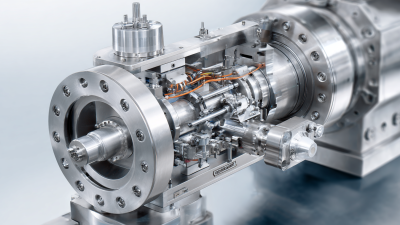
You know, Pressure Homogenizers are really shaking things up in industries like food processing and pharma. As folks get more and more eager for consistently high-quality products, companies are jumping on the bandwagon and investing big time in this tech. I came across a report from Markets and Markets that says the homogenizer market could hit around $3.3 billion by 2025 — pretty impressive growth, right?
Using a Pressure Homogenizer does wonders for product stability and extending shelf life. That’s especially important in the food world, where people really care about quality and safety. In fact, a survey from the Food Industry Association found that about 75% of consumers are willing to pay extra for top-notch goods. But here’s the catch — not every manufacturer has the resources or the equipment to reach that level of consistency all the time.
Of course, there are some hiccups. The initial cost for the equipment, plus ongoing maintenance, can be pretty hefty. Companies really need to weigh these upfront expenses against the long-term benefits of better product performance. Adopting a Pressure Homogenizer isn’t just some trendy move — it’s more like a smart step towards staying competitive and delivering the best to your customers.
Pressure homogenization offers significant benefits for food processing industries. This method enhances product stability by reducing particle size. Smaller particles lead to better emulsification and dispersion. Studies show that homogenized products have improved shelf life. For instance, dairy products processed this way can have a shelf life increase of up to 20%.
The efficiency of pressure homogenizers also contributes to energy savings. Reports indicate that these systems can use up to 30% less energy compared to traditional processing methods. This reduction helps in lowering operational costs, which is crucial for food manufacturers. Moreover, heat-sensitive ingredients maintain their nutritional value, further improving product quality.
Despite these advantages, some challenges exist. Not all products are suitable for homogenization. Testing is essential to determine the right approach. Companies need to balance the benefits of pressure homogenization with the specific characteristics of their products. Continuous research and feedback are vital for optimizing these processes.
| Benefit | Description |
|---|---|
| Improved Texture | Creates a uniform texture in products, enhancing mouthfeel and overall quality. |
| Enhanced Stability | Reduces separation in emulsions and suspensions, ensuring long-lasting product stability. |
| Reduced Size of Particles | Effectively decreases the size of particles and droplets, improving product quality. |
| Better Shelf Life | Improves the preservation of nutrients and flavors, extending shelf life. |
| Increased Nutrient Retention | Maintains the nutritional integrity of processed foods, important for health-conscious consumers. |
| Cost Efficiency | Reduces ingredient and processing costs by improving efficiencies in production. |
| Versatility | Can be used in a wide range of applications, including dairy, beverages, and sauces. |
| Improved Flavor Release | Enhances flavor release, making products more appealing to consumers. |
| Enhanced Safety | Processes are designed to ensure hygienic conditions, reducing contamination risks. |
Pressure homogenizers significantly enhance product shelf life and stability. When high pressure is applied, it creates uniform particle sizes. This process prevents the separation of ingredients, resulting in a consistent mixture. Products, like dairy or sauces, will maintain their flavor and texture over time.
Tips for achieving optimal results include ensuring proper equipment calibration. Regular maintenance is crucial for consistent performance. Over time, you may notice variations in product stability. Monitoring these changes allows for timely adjustments.
Another benefit is the reduction of microbial growth. Smaller particles create a less favorable environment for bacteria. This leads to longer shelf life without needing additional preservatives. However, it’s essential to test products periodically to confirm their quality. A proactive approach can mitigate potential issues before they affect consumers.
Pressure homogenization is a powerful technique that enhances nutrient retention in various food and beverage products. This method uses high pressure to create uniform particle sizes, promoting better dispersion of nutrients. According to a study by the Journal of Food Engineering, pressure homogenization can improve nutrient bioavailability by up to 30%. This means that vitamins and minerals can be more effectively absorbed by the body.
One significant benefit of this process is the preservation of sensitive compounds. Heat and mechanical stress can degrade vitamins like Vitamin C and some B vitamins. By using pressure homogenization, these nutrients remain intact, ensuring that consumers receive maximum health benefits. Furthermore, the University of Massachusetts conducted research indicating that products processed with pressure homogenizers exhibit improved shelf stability. This helps reduce food waste, a critical issue in today’s society.
Despite its advantages, the technology does require investment and careful operation. Optimal pressure settings are crucial to ensure effective nutrient retention while avoiding potential damage to the product. It’s essential for manufacturers to understand these dynamics fully. Monitoring the process can be challenging and requires skilled personnel. Balancing efficiency and quality may not always be straightforward.
This bar chart illustrates the various benefits of using a pressure homogenizer, showcasing each benefit's relative score based on nutrient retention, stability, texture improvement, and other factors. The benefits are rated on a scale from 1 to 10, indicating their significance in enhancing product quality.
Pressure homogenizers play a crucial role in enhancing the texture and mouthfeel of various products. By applying high pressure, these machines break down fat globules and solid particles. This process creates a uniform mix, improving viscosity and stability. Consequently, the final product achieves a smoother and creamier consistency, which consumers often prefer.
In food and beverage applications, texture matters immensely. A product with inconsistent texture can be unappealing. Pressure homogenizers ensure that ingredients are well-distributed, which enhances overall sensory experience. For example, in dairy products, a well-homogenized milk retains its creaminess without separation. However, achieving the perfect balance can be challenging. Some products may still exhibit separation or graininess.
Moreover, the impact of homogenization on mouthfeel cannot be overstated. A finer particle size enhances the tactile experience during consumption. It creates a pleasant coating sensation without unwanted grit. Nevertheless, over-processing can lead to an undesirable thin texture. Understanding the right pressure and duration becomes essential. Each product is unique, requiring careful adjustments to meet its specific needs.
Using pressure homogenizers can lead to significant cost savings in production processes. Reports indicate that industries utilizing these machines see efficiency improvements of up to 30%. A study by the Food and Agricultural Organization noted that homogenization minimizes waste. This can reduce raw material costs and labor expenses.
The initial investment in a pressure homogenizer may seem high. However, the long-term savings often outweigh the upfront costs. The operational efficiency generated allows companies to produce more with less. By ensuring product consistency, manufacturers can reduce the risk of spoilage. Data suggests that consistency in production can lead to a 15% increase in customer satisfaction.
Despite the advantages, some businesses hesitate to adopt this technology. They may need more insight into the ongoing maintenance and operational requirements. Regular maintenance of pressure homogenizers is essential for optimal performance. Ignoring this can lead to higher long-term costs. Inadequate training of operators can also diminish the intended benefits. Addressing these challenges is crucial for maximizing the advantages of pressure homogenization in production.
Pressure homogenization plays a pivotal role in ensuring microbial safety in food products. Studies indicate that pressure homogenizers can significantly reduce pathogenic microorganisms. For instance, research shows a reduction of up to 99% in bacteria like E. coli and Salmonella in milk when subjected to high pressure. This process enhances the safety of consumables.
The mechanism works through intense pressure and shear forces. These forces disrupt microbial cell walls, leading to cell lysis. It is a reliable method to enhance food safety without compromising nutritional quality. Interestingly, while the benefits are clear, the initial investment in such technology can be substantial. Not every facility can afford this equipment, leading to inequalities in food safety standards.
Additionally, there’s ongoing debate about the process's effectiveness across different food types. Some argue that not all products respond equally to homogenization. For example, certain oils and emulsions may require tailored approaches to achieve similar safety levels. Thus, while pressure homogenization is a powerful tool for microbial safety, its application is not one-size-fits-all. There’s room for improvement in understanding its diverse effects across food categories.
Pressure homogenizers play a crucial role in pharmaceutical formulation development. Their ability to create stable emulsions and suspensions improves the bioavailability of active ingredients. This is especially important for medications that require precise dosing and consistency. Through high-pressure processing, these machines reduce particle size effectively, enhancing the uniformity of formulations.
The application of pressure homogenizers can be complex. While they provide excellent results, the settings must be carefully adjusted. Different formulations may require varying pressures and cycles. If not optimized, the product can turn out unpredictable. This necessitates a deep understanding of both the technology and the specific pharmaceutical compounds being processed.
Incorporating pressure homogenization into drug development can also streamline production. It may reduce the need for additional processing steps. However, researchers must remain vigilant about potential scaling issues. Regular evaluation and adjustments are vital to ensure optimal performance. This continuous improvement mindset is essential in the competitive pharmaceutical landscape.
: It is a method that reduces particle size, enhancing product stability, emulsification, and dispersion.
It can increase the shelf life of products, especially dairy, by up to 20%.
Yes, they can use up to 30% less energy than traditional methods, lowering operational costs.
Not all products are suitable for homogenization, so testing is crucial to find the right approach.
While initial costs are high, long-term savings can offset this due to increased efficiency.
Consistency can lead to a 15% increase in customer satisfaction and reduced spoilage risk.
Regular maintenance is essential; neglect can cause higher long-term costs and reduced efficiency.
Different formulations require tailored settings; incorrect adjustments can lead to unpredictable results.
They streamline production, potentially reducing additional processing steps and improving bioavailability.
They must monitor scaling issues and ensure continuous evaluation for optimal performance.
The article discusses the numerous benefits of using a Pressure Homogenizer, particularly in food processing and pharmaceutical industries. One of the key advantages is its ability to enhance the shelf life and stability of products by effectively reducing particle size and promoting uniform dispersion. This technology also improves nutrient retention, ensuring that essential vitamins and minerals are preserved during processing.
Additionally, Pressure Homogenizers play a crucial role in enhancing the texture and mouthfeel of various products, making them more appealing to consumers. From a cost-efficiency standpoint, the use of these homogenizers can optimize production processes by reducing waste and increasing yield. Moreover, their application promotes microbial safety by minimizing the risk of contamination, ultimately ensuring safer food products. Overall, the integration of Pressure Homogenizers significantly contributes to quality improvement and innovation in product development.