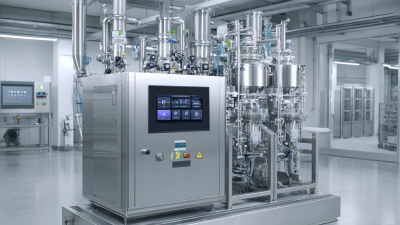
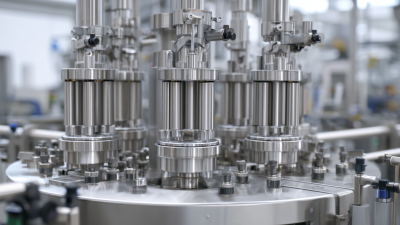
Lately, there's been a pretty noticeable rise in the demand for higher-quality emulsions and suspensions. You know, industries like food, pharma, and cosmetics are really honing in on product quality these days. That’s where the Ultra High Pressure Homogenizer comes into play—it's actually pretty essential. I read in this report from ResearchAndMarkets that the global market for these machines might hit around $800 million by 2026. Crazy, right? It just shows how much companies are leaning on cutting-edge tech these days.
Now, this homogenizer is no joke when it comes to efficiency and accuracy. It’s capable of making really fine, stable emulsions. For example, it can get particle sizes down to sub-micron levels, which genuinely boosts how well a product performs. Not only does it improve the texture, but it also helps products last longer on the shelf. That said, I know a lot of companies are still pretty hesitant about investing in this kind of equipment—they’re worried about whether it’ll pay off in the long run.
Of course, even though the benefits are pretty clear, it’s not all smooth sailing. The initial investment can be quite steep, and keeping everything running smoothly requires some ongoing maintenance and tweaks. Leading players like GEA and SPX Flow are seeing some promising results, but they also face their own set of challenges. So, really, taking a smart, well-thought-out approach is key to handling all these complexities without losing your mind.

Top 10 Benefits of Using an Ultra High Pressure Homogenizer
When it comes to food processing, an ultra high pressure homogenizer offers significant advantages. This equipment breaks down particles and droplets effectively. This results in a finer texture and improved product stability. For beverages, it enhances mouthfeel, making them more enjoyable. Additionally, the process can extend shelf life by eliminating harmful bacteria without heat. Many manufacturers have noticed remarkable changes in their products post-homogenization.
Quality control becomes easier with this technology. It creates uniform mixtures, ensuring consistent quality. Some users, however, report initial challenges in adjusting the settings. Fine-tuning the pressure and flow might take time. Getting it just right can be a trial-and-error process. Yet, the results often lead to better product acceptance in the market. Manufacturers can achieve a wider range of applications, from dairy to sauces.
Cost efficiency is another noteworthy perk. Although the initial investment can be high, the long-term benefits are clear. Reduced energy consumption and waste are significant. Some businesses have found that operational costs decrease after switching. Additionally, improved product quality can lead to increased sales. As companies analyze their processes, they may uncover areas needing further optimization, making the journey rewarding despite its imperfections.
Top 10 Benefits of Using an Ultra High Pressure Homogenizer
Enhanced Product Stability Through Particle Size Reduction Techniques
In the world of product manufacturing, the significance of particle size reduction cannot be overstated. Using an ultra high pressure homogenizer allows for precise control over particle sizes. This method enhances product stability. Smaller particles often lead to smoother textures and better taste. However, achieving consistent results can sometimes be challenging. Variations in raw materials may affect outcomes.
The ultra high pressure process helps in breaking down larger particles into finer ones. This technique not only improves stability but also increases the bioavailability of active ingredients. Products that benefit from this process often experience longer shelf lives. However, it’s crucial to monitor the system closely. Any hiccup in pressure settings can lead to suboptimal results.
Moreover, achieving the perfect particle size is an art. Too small, and you might compromise flavor and texture. Too large, and you risk creating a gritty mouthfeel. Manufacturers need to strike a balance. Refining this process can be a continuous journey. Feedback from customers and sensory evaluations play a vital role in improvement. The path to enhanced product stability requires dedication and flexibility.
Improved Nutrient Bioavailability in Food and Beverage Applications
Ultra High Pressure Homogenizers (UHPHs) have a significant impact on nutrient bioavailability, especially in food and beverage applications. These machines can reduce particle sizes down to a few microns, enhancing the absorption rates of vitamins and minerals. Research shows that smaller particles often lead to better digestion and improved nutrient delivery. For instance, emulsions achieve higher stability and uniformity, making essential nutrients more accessible to the body.
According to industry reports, over 30% of nutrients in traditional food processing can become less bioavailable. This loss occurs due to the formation of large particles that hinder absorption. UHPH technology can help counter this issue by effectively breaking down these particles. With up to 70% improved nutrient delivery reported in some studies, the potential for better health outcomes is clear.
However, there are challenges in implementing UHPH systems. The initial investment can be high. There's also the need for skilled technicians to operate the devices properly. Additionally, optimizing the process for specific nutrients can require extensive testing. This iterative process may lead to inefficiencies as recipes are continually adjusted. Nonetheless, the advantages may outweigh these concerns, making UHPH a valuable tool for enhancing nutrient bioavailability.
Increased Efficiency in Emulsification Processes for Creams and Sauces
Using an ultra high pressure homogenizer can significantly enhance emulsification processes, particularly for creams and sauces. This equipment not only ensures a finer dispersion of ingredients but also improves texture and stability. When making creamy sauces, the uniformity achieved is crucial. It prevents separation, resulting in a consistently smooth product for consumers.
Tips: Regularly monitor the pressure settings. Each recipe may require different adjustments for optimal results. Over-processing can lead to unintended changes in flavor and consistency. Pay attention to the temperature as well. Excessive heat can degrade sensitive ingredients, impacting the final product.
Efficiency is another key benefit. An ultra high pressure homogenizer can quickly process large batches. This is beneficial for commercial kitchens and food manufacturers. Yet, some might find the initial investment daunting. It’s essential to evaluate the long-term gains against upfront costs. Experimenting with different ingredient combinations can lead to exciting results. Be willing to adapt your methods and learn from the process.
Significant Cost Savings Through Reduced Energy Consumption Metrics
Ultra High Pressure Homogenizers (UHPH) offer remarkable benefits. One key advantage lies in their ability to significantly reduce energy consumption. This technology operates efficiently, minimizing the energy required to achieve the desired product consistency and quality. By optimizing the homogenization process, UHPH systems can lower operational costs.
When businesses embrace UHPH, they often see substantial savings on energy bills. For instance, reduced energy metrics not only improve profit margins, but they also contribute to environmental sustainability. Companies consume less energy, which lowers their carbon footprint. However, the initial investment in such technology can feel daunting. It’s essential to evaluate the long-term savings against upfront costs.
While significant cost reductions are possible, not every facility may be ready for such an upgrade. Existing systems can sometimes yield satisfactory results. Transitioning to UHPH should involve careful consideration of specific production needs and overall goals. Ultimately, it’s important to reflect on whether the benefits truly align with an organization’s operational strategy.
Advanced Preservation Methods Leading to Extended Shelf Life and Quality
Ultra high pressure homogenizers are becoming crucial in food processing. They utilize intense pressure to break down particles, leading to a more stable product. This is particularly valuable for liquid foods. Textures improve, and flavors become richer. Consistency is key.
The advanced preservation methods enabled by these machines extend shelf life significantly. By eliminating bacteria and pathogens, products remain fresh longer. However, this is not without challenges. Some consumers may prefer minimally processed foods. Sophisticated techniques can seem overly industrialized to them. Balancing technology and tradition is vital in modern food production.
Quality plays a big role as well. Texture and taste are enhanced, but not everyone may notice these subtle changes. Education around the benefits of high pressure processing is necessary. Misconceptions can prevent acceptance. Companies must communicate effectively about the advantages while respecting consumer concerns.
Top 10 Benefits of Using an Ultra High Pressure Homogenizer
| Benefit |
Description |
Impact on Shelf Life |
| Enhanced Emulsification |
Creates stable emulsions by reducing droplet size. |
Improves consistency and reduces separation over time. |
| Increased Homogeneity |
Ensures uniform distribution of particles in products. |
Leads to improved product quality and taste. |
| Extended Shelf Life |
Reduces microbial load by damaging cell walls. |
Decrease spoilage and increase storage duration. |
| Improved Texture |
Enhances mouthfeel by breaking down large particles. |
Provides a smoother experience, appealing to consumers. |
| Better Flavor Release |
Increases the bioavailability of flavors. |
Enhances the perception of freshness and quality. |
| Efficient Use of Ingredients |
Allows for reduced usage of emulsifiers and stabilizers. |
Cost savings and enhanced health profile of products. |
| Reduction of Additives |
Minimizes the need for chemical preservatives. |
Appeals to health-conscious consumers. |
| Scalable Production |
Easily adjusted for batch sizes, from small to large. |
Facilitates growth and expansion of businesses. |
| Reduced Energy Costs |
More efficient processing requires less energy. |
Lower operational costs contributing to profitability. |
| Enhanced Nutritional Value |
Retains more nutrients during processing. |
Attracts health-focused consumers seeking quality investment. |
Lower Microbial Load Through Effective Homogenization for Food Safety
Homogenization plays a crucial role in food safety. Using an ultra high pressure homogenizer reduces the microbial load. This process effectively breaks down cells, destroying harmful bacteria. The high pressure creates tiny droplet sizes and a uniform mixture. This consistency is vital for extending shelf life and enhancing product quality.
Tip: Ensure your homogenizer is well-maintained. Regular checks can prevent microbial growth and equipment failure.
Proper homogenization not only improves safety but also enhances flavors. However, achieving the right balance can be tricky. Over-processing may alter taste and texture. Monitoring the process is essential. Small adjustments can yield better results.
Tip: Test batch sizes to find the optimal pressure for each product. Keep records to refine your techniques.
Food safety is non-negotiable. Achieving lower microbial loads is a must. An ultra high pressure homogenizer is a powerful tool. Still, one must remain vigilant about equipment settings and processes. Continuous learning leads to improved outcomes.
Conclusion
The "Ultra High Pressure Homogenizer" is a cutting-edge technology that offers numerous benefits across food and beverage production. One of the primary advantages is the enhanced product stability achieved through effective particle size reduction techniques. This not only improves the texture and appearance of products but also leads to improved nutrient bioavailability, ensuring consumers receive the maximum health benefits.
Moreover, the Ultra High Pressure Homogenizer significantly increases efficiency in emulsification processes for creams and sauces, which streamlines production while reducing costs. As a result of its advanced preservation methods, products benefit from an extended shelf life and maintained quality. Additionally, the process lowers microbial load, contributing to improved food safety. Overall, the integration of this technology results in substantial cost savings through reduced energy consumption, making it a vital asset in modern manufacturing practices.