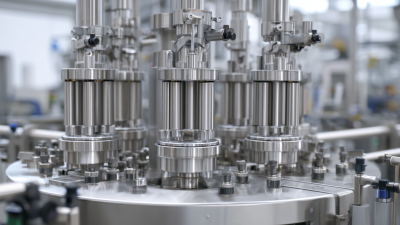
Thinking about getting an HPH High Pressure Homogenizer? Well, it's definitely a smart move if you're after better product consistency and top-quality results. These machines are pretty much game-changers across different industries—they help make your products more uniform and improve the overall texture of emulsions. Plus, they’re actually quite efficient, reducing particles like a champ and making the final product smoother.
But it’s not just about performance; investing in an HPH Homogenizer can also save you money in the long run. Less waste, better production workflows—those are huge perks. Companies like HPH Technologies have spent years perfecting these systems, so you can trust that you’re getting equipment that's reliable and built to handle all sorts of operational needs.
Of course, while these homogenizers offer some serious benefits, it’s important to really think about what your specific needs are. Finding that sweet spot between cost and what you want to achieve is key. Every choice you make isn’t just about now; it’s about setting yourself up for future growth and sustainability in your industry. So, take your time, weigh your options, and make sure it’s the right fit for your goals.
High-pressure homogenizers play a crucial role in various industries, especially food and pharmaceuticals. These machines work by forcing substances through narrow gaps at high pressures. This process reduces particle sizes and ensures a uniform product. According to a report by Research and Markets, the global homogenizer market is projected to reach $2.5 billion by 2024, highlighting the growing need for efficient blending solutions.
One primary benefit of high-pressure homogenizers is their ability to enhance product stability. For example, they can significantly improve the emulsification of oils and water. Studies indicate that a reduction in droplet size, sometimes to less than 1 micron, leads to better texture and sensory experiences in food products. Moreover, the improved stability extends the shelf life of products, reducing waste and increasing profitability.
However, achieving the optimal performance of high-pressure homogenizers requires careful consideration. Not all materials respond equally to homogenization. Some may require multiple passes to achieve the desired consistency. Failing to adjust pressure settings can lead to inefficient processing and inconsistent product quality. This highlights the need for ongoing training and understanding of machine parameters. Operators must regularly evaluate their processes to maximize the benefits of high-pressure homogenization.
Homogenizers play a pivotal role in achieving product consistency.
Enhanced product quality is crucial for manufacturers.
High-pressure homogenizers effectively break down particles into smaller sizes.
This process creates a uniform blend, improving texture and taste.
Research shows that consistent particle size affects product stability. According to a report by the
International Journal of Food Science, particle size variation can lead to texture inconsistencies.
About 85% of consumers prefer products with stable qualities.
High-pressure homogenizers maintain these essential characteristics. They reduce the likelihood of separation and settling over time.
However, achieving perfect consistency is challenging. Some operators may overlook maintenance, leading to variability.
Regularly checking pressure settings and cleaning the apparatus is crucial. Neglecting these aspects can impact overall output quality.
The focus should always be on parameters that directly influence the final product. In an industry where consumers are increasingly discerning,
maintaining high-quality standards is non-negotiable.
The importance of particle size reduction in the homogenization process cannot be overstated. Studies show that when particle sizes are reduced to the nanometer range, the stability of emulsions significantly improves. This results in longer shelf life and enhanced product quality. According to a recent industry report, products with smaller particle sizes exhibit better dispersibility and texture, leading to higher consumer acceptance.
High pressure homogenizers provide efficient particle size reduction by forcing fluids through a narrow gap under high pressure. This process creates shear forces and cavitation, effectively breaking down larger particles. Research indicates that a reduction to 100 nanometers can result in a 50% increase in stability for emulsified systems. However, achieving such precise reduction levels requires optimal operating conditions and equipment maintenance.
It's crucial to highlight that effective size reduction may not be universal across all formulations. Different material properties can lead to inconsistent results. Additionally, too much energy input can adversely affect sensitive ingredients, potentially harming the overall product. Continuous monitoring and adjustments are necessary to balance energy input with the quality of the end product, ensuring that the full benefits of high-pressure homogenization are realized.
| Benefit | Description | Impact on Quality | Examples of Applications |
|---|---|---|---|
| Improved Particle Size Reduction | High pressure homogenizers break down particles to nanometer scale, improving stability in emulsions and suspensions. | Enhances shelf life and stability of products by preventing phase separation. | Cosmetics, pharmaceuticals, food & beverages. |
| Homogeneous Mixture Creation | Achieves uniform dispersion of ingredients, ensuring consistent quality throughout the product. | Reduces variability in product performance. | Dairy products, sauces, and dressings. |
| Cost Efficiency | Lower energy consumption and reduced processing time lead to lower operational costs. | Increases profit margins by optimizing manufacturing processes. | Beverage production, cosmetics formulation. |
| Versatility | Can process a wide range of substances, from low to high viscosity materials. | Easily adapts to various production needs without requiring major equipment changes. | Pharmaceuticals, food, and industrial applications. |
| Enhanced Bioavailability | Reduces particle size that can improve the absorption of active ingredients. | Can lead to more effective formulations in dietary supplements and pharmaceuticals. | Nutraceuticals and topical formulations. |
High pressure homogenizers (HPH) are essential tools in many food and beverage processes. One significant advantage they offer is the increased shelf life of products. When a product is homogenized under high pressure, the cell walls of microorganisms are broken down, significantly reducing their ability to reproduce. This means fewer preservatives are needed, leading to cleaner labels and healthier choices for consumers.
Moreover, the preservation of nutrients is a key factor. Homogenization at high pressure can help maintain the integrity of vitamins and minerals during processing. Unlike traditional methods, which may degrade sensitive compounds, HPH retains essential nutrients crucial for consumer health. However, it is vital to consider that not all materials respond identically to homogenization. Some may lose their texture or flavor, which could deter consumers.
Ultimately, ensuring quality and nutritional value while prolonging shelf life is a delicate balancing act. Buyers must evaluate their specific needs and processes. Exploring the science behind homogenization can better inform decisions and improve product outcomes. There are nuances in formulation and processing that require ongoing reflection and adjustment.
High Pressure Homogenizers (HPH) are celebrated for their adaptability across various applications. This versatility is a significant benefit for buyers. Whether used in food production, pharmaceuticals, or cosmetics, HPH can efficiently process a range of materials. The ability to adjust pressure settings enhances flexibility, making it suitable for different viscosity levels. Users can experiment with different formulations without investing in multiple machines.
One critical aspect of versatility is the scale of operation. HPH can handle small batches for research or large volumes for industrial production. This adaptability is essential for businesses looking to innovate while maintaining consistent quality. Buyers should consider the machine's specifications to ensure it meets their unique application needs.
When choosing an HPH, users should reflect on their specific requirements. Think about the types of materials you'll be processing. It can be easy to overlook compatibility but doing so is crucial. Test different pressures to find optimal results. Balance efficiency with quality for the best outcome.
Cost efficiency is a key advantage of high-pressure homogenizers in production processes. These machines optimize the emulsification and particle size reduction. By creating stable emulsions, they reduce the amount of raw materials needed. This results in significant savings. In industries like food and cosmetics, minimizing waste is crucial.
Moreover, high-pressure homogenizers enhance productivity. They streamline operational workflows, allowing for continuous processing. This leads to higher output in less time. Efficient energy use also contributes to cost savings. Companies can produce more while lowering energy bills.
However, it's important to consider the initial investment. High-quality homogenizers can be costly. Businesses must analyze return on investment carefully. A balance between upfront costs and long-term savings is vital. Finding this balance requires thoughtful planning.
This chart illustrates the cost efficiency achieved through enhanced production processes when utilizing high pressure homogenizers. The data represents the percentage increase in production efficiency across five key benefits.
When selecting a high pressure homogenizer, buyers should consider various factors. The homogenizer's pressure rating is crucial. Equipment with higher pressures yields finer emulsions. A recent market analysis revealed that 75% of users prioritize pressure specifications over other features. This focus ensures optimal product consistency, especially in industries like food and pharmaceuticals.
Additionally, energy efficiency is another key aspect. Data indicates that energy costs represent about 30% of operational expenses in large-scale homogenization processes. Selecting energy-efficient models reduces long-term expenditures. Buyers should also examine maintenance requirements. Complicated machines can lead to prolonged downtime. A user-friendly design enhances operational reliability and product quality.
Furthermore, understanding the scale of production is vital. For small batches, simpler models suffice. In contrast, high-volume operations require robust systems. This decision influences not only performance but also cost efficiency. Engaging with industry professionals can provide insights into the latest advancements. Buyers should remain aware of evolving technologies to make informed choices.
: They improve cost efficiency by enhancing emulsification and particle size reduction.
They create stable emulsions, which minimize the amount of raw materials needed.
They streamline workflows, leading to higher output in less time.
Yes, energy costs can represent about 30% of operational expenses.
The pressure rating is crucial for achieving finer emulsions and consistency.
Simple models suit small batches, while high-volume operations need robust systems.
Energy-efficient models can significantly reduce long-term expenditures.
Complicated machines can lead to prolonged downtime, impacting production.
Engage with industry professionals for insights on the latest advancements.
It's essential to analyze the return on investment and balance costs with potential savings.
The article titled "Top 5 Hph High Pressure Homogenizer Benefits for Buyers" delves into the significant advantages of utilizing Hph High Pressure Homogenizers in various production processes. High-pressure homogenizers enhance product consistency and quality by ensuring uniform mixture and dispersion of ingredients. They also excel in particle size reduction, which not only stabilizes products but also contributes to an elongated shelf life, preserving essential nutrients.
Moreover, the versatility of Hph High Pressure Homogenizers allows them to be effectively used in a range of applications, making them an invaluable tool for industries like food and pharmaceuticals. Finally, these machines promote cost efficiency by optimizing production processes. For buyers considering this technology, understanding these key benefits and factors is crucial for making an informed decision.