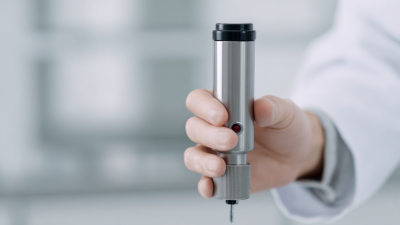
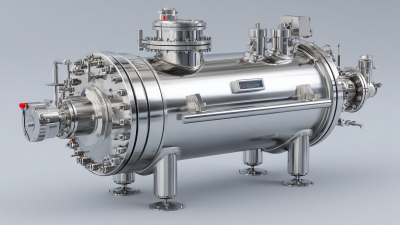
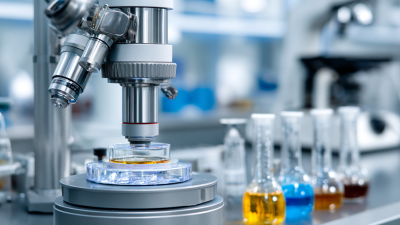
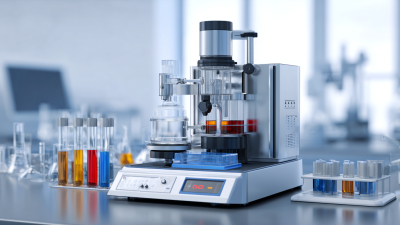
Labs really depend on precise equipment, and having a Homogenizer Machine in the lab is pretty much essential. These machines help keep sample prep consistent, which is super important for research. I recently came across a market report from Grand View Research, and it said that the lab homogenizer market is expected to hit around $1.2 billion by 2027. That’s a pretty clear sign that more and more folks are looking for reliable homogenization tools.
There are quite a few different types of homogenizers out there, each suited for specific lab tasks. For example, high-pressure homogenizers are great for making fine emulsions, while ultrasonic models are popular for breaking open cells efficiently. Brands like IKA and Eppendorf are pretty much favorites when it comes to advanced equipment. But, here’s the thing—no matter how fancy the machine is, there’s a learning curve. The results depend a lot on the operator’s skill, not just on the machine specs.
Picking the right Homogenizer for your lab isn’t just about buying the most expensive or biggest model. You really need to consider what fits your particular needs. Every machine has its own pros and cons, so it’s all about matching it to what your experiments require. Plus, even with top-notch gear, your technique and experience make a big difference in how well it performs. So, ongoing training and learning best practices are crucial if you want to get the best results out of your homogenizer.

Overview of Homogenizer Machines in Laboratory Settings
Homogenizer machines play a crucial role in laboratory settings. They are designed to achieve uniform mixtures of liquids and solids. This consistency is essential for experiments requiring precise measurements. Some commonly homogenized materials include biological samples, food products, and chemical solutions. The machines can break down particles to enhance solubility and ensure even distribution of components.
In laboratories, various types of homogenizers are utilized. Ultrasonic homogenizers use high-frequency sound waves for effective mixing. High-pressure homogenizers apply extreme pressure to achieve similar results. Each type has its own advantages. Selecting the right one depends on the specific material and desired outcome. However, challenges can arise during the homogenization process. Some samples may be difficult to homogenize thoroughly. Others might lose their desired characteristics due to excessive shear forces.
Experimentation with different homogenization techniques can lead to better results. It often takes time to understand the nuances of each method. Researchers must observe how each process affects their samples. This takes careful consideration. Often, not all samples respond well to a single method. Continuous adjustments and reflections on these practices can lead to improved protocols.
Key Features to Consider When Choosing a Homogenizer
When choosing a homogenizer for laboratory use, consider several key features. The type of homogenization technique is crucial. Some devices use high shear, while others leverage ultrasonic waves. Each method affects the consistency and quality of your samples. Think about what you are processing. Liquid samples often require different handling than solids or semi-solids.
Speed and power are also critical. A homogenizer's speed affects how efficiently it processes samples. Higher speeds generally lead to finer emulsions. However, a balance is necessary; too much speed can create heat, which may harm delicate samples. Pay attention to the motor power; it should match your specific needs. Additionally, ease of cleaning is vital for laboratory standards. A device that’s difficult to clean can lead to contamination issues and wasted time.
The size and footprint of the homogenizer matter in a lab setting. Consider space constraints and if it’s portable. Weight and size can impact usability. User-friendly interfaces enhance workflow. Taking the time to evaluate these features can lead to better experimental outcomes. Always reflect on your actual requirements and resist getting swayed by trends.
Top 5 Homogenizer Machines: A Detailed Comparison
Homogenizers play a vital role in laboratory settings. They ensure uniformity in samples, making them essential for accurate results. The choice of a homogenizer can vary greatly. Factors include sample size, processing time, and the type of material being homogenized.
There are five standout homogenizer machines that cater to different needs. Some excel in high shear tasks, breaking down tough particles effectively. Others are more suited for gentle processing, preserving delicate cell structures. Each machine has unique specifications that can influence your workflow. Price points also vary, which could affect decision-making. It’s crucial to assess which features align with your lab’s objectives.
However, not all homogenizers are perfect. Some may struggle with larger volumes or produce inconsistent results. Users often report challenges regarding noise levels and heat generation. It's a reminder to regularly evaluate performance and adapt processes accordingly. Choosing the right homogenizer is not just about features. It's about finding a balance that enhances laboratory efficiency while addressing specific challenges.
Benefits of Using Homogenizers in Laboratory Applications
Homogenizers are essential tools in laboratory settings. They enhance sample consistency and improve the accuracy of experimental results. A recent report revealed that nearly 75% of labs prioritize uniformity in sample preparation. This uniformity leads to better reproducibility in experiments.
One notable advantage of homogenizers is their ability to process various sample types. These machines can emulsify, disperse, and mix materials effectively. For instance, they can break down cell tissues or combine liquids into stable emulsions. According to a study by the Analytical Chemistry Journal, using a homogenizer can reduce particle size by up to 50%. This reduction is crucial for applications like drug formulation.
Yet, not all homogenizers meet the same standards. Some may struggle with difficult samples, resulting in uneven mixtures. Labs must evaluate the specific requirements of their experiments. A mismatched machine can lead to wasted resources and time. Keeping an eye on performance metrics is vital for selecting the right equipment.
Top 5 Homogenizer Machines For Laboratory Use and Their Benefits
| Homogenizer Model |
Max Speed (RPM) |
Volume Capacity (L) |
Benefits |
| Model A |
30,000 |
1 |
High efficiency for emulsions and suspensions. |
| Model B |
25,000 |
2 |
Versatile for a range of laboratory applications. |
| Model C |
40,000 |
0.5 |
Ideal for small sample sizes with high shear force. |
| Model D |
15,000 |
3 |
Cost-effective option with good performance. |
| Model E |
35,000 |
1.5 |
Excellent for lab-scale production and research. |
Real-World Applications of Homogenizers in Research
Homogenizers are vital tools in laboratory settings. They allow researchers to create uniform mixtures of various substances. In fields like biology and chemistry, these machines play an essential role. For instance, in cellular biology, homogenizers help in breaking down cell walls. This process is crucial for studying the contents of cells.
In food science, homogenizers enable the consistent texture of emulsions. Imagine a creamy sauce or a stable salad dressing. Without homogenization, these mixtures often separate. Moreover, in pharmaceuticals, homogenizers assist in the formulation of drugs. They ensure that active ingredients are evenly distributed. This uniformity is vital for the efficacy of medications.
However, the choice of a homogenizer can be challenging. There are many types available, each with unique features. Some are better for small samples, while others handle larger quantities. Researchers must reflect on their specific needs. The perfect machine might not exist. Adapting techniques and improving practices is an ongoing process.
Future Trends in Laboratory Homogenization Technology
Laboratory homogenization technology is evolving rapidly. New trends indicate a significant shift towards automation and precision. Recent industry reports show that automated systems can reduce human error by up to 30%. This improvement ensures better reproducibility and efficiency in experiments.
Another key trend is the use of more sustainable materials. Researchers are increasingly seeking eco-friendly homogenizers that minimize environmental impact. A study conducted last year revealed that nearly 45% of laboratory managers prioritize sustainability in their equipment choices. However, the transition to greener alternatives may come with challenges. Manufacturers need to balance performance and environmental responsibility.
Moreover, digital integration appears to be a game changer. Smart homogenizers can be monitored remotely. This feature enhances accessibility for researchers. Yet, with increased connectivity, concerns about data security rise. Laboratories must be cautious and assess their vulnerability to cyber threats. Embracing new technologies requires careful consideration of both benefits and potential risks.
Comparison of Homogenizer Machines for Laboratory Use
Conclusion
Homogenizer machines for laboratory use play a crucial role in achieving uniform sample preparation, essential for various research applications. When selecting a homogenizer machine for laboratory settings, key features such as power, speed, and capacity should be considered to ensure it meets specific experimental needs. The article outlines a detailed comparison of the top five homogenizer machines, highlighting their functionalities and advantages in laboratory environments.
In addition to the selection process, the benefits of using homogenizers include improved sample consistency, reduced processing times, and enhanced reproducibility of results. Regular maintenance is pivotal for optimal performance, ensuring that these machines function effectively over time. The article also touches on real-world applications in research and discusses future trends in laboratory homogenization technology, indicating a move towards more advanced and efficient solutions in sample processing.