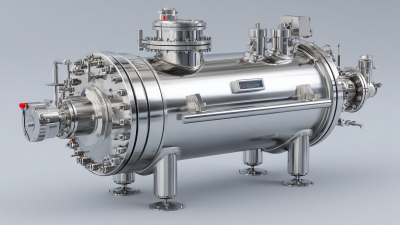
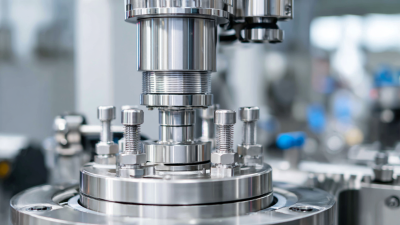
When it comes to food processing and pharmaceuticals, the purpose of a homogenizer is pretty important. I remember Dr. Emily Carter from TechBlend Solutions once mentioned, “The homogenizer basically turns ingredients into a uniform, consistent mix.” It’s a crucial step to make sure products turn out quality-wise and stay stable over time.
So, how do homogenizers work? Well, they basically break down particles into smaller bits, giving liquids a finer, smoother texture. Like in dairy, for example—homogenizers stop the cream from separating out in milk. But, honestly, getting that perfect mix isn’t always easy. Overdoing it can mess with the texture, which might not sit well with customers.
Every industry has its hiccups, right? Sometimes results can be a bit all over the place—maybe because of different equipment settings or variations in raw materials. That’s why really understanding what a homogenizer’s purpose is can help you fix or avoid these issues. Finding that sweet spot between efficiency and quality takes some careful thought and a bit of trial and error.

Definition and Functionality of Homogenizers in Various Industries
Homogenizers play a crucial role in multiple industries. Their primary purpose is to create a uniform mixture of ingredients. This process is essential in food production, pharmaceuticals, and cosmetics. In food processing, for instance, homogenization improves texture and stability. According to a report by MarketsandMarkets, the food industry anticipates a 6% growth in homogenizer demand annually through 2025.
In the pharmaceutical sector, homogenizers enhance drug delivery. They ensure consistent particle size, which aids in absorption. A recent study highlighted that effective homogenization can increase bioavailability by over 30%. This data raises questions about the potential inefficiencies in current manufacturing methods. Many companies still rely on outdated processes.
Moreover, in cosmetics, homogenizers help mix oil and water-based components. This ensures creams and lotions have a smooth feel. Industry reports show that 75% of consumers prefer consistently textured products. However, achieving this consistency can be challenging. Variations in raw materials may lead to inconsistent results. This inconsistency invites reflection on quality control measures in production lines.
The Mechanism of Action: How Homogenizers Achieve Homogenization
Homogenizers play a crucial role in various industries, especially in food and pharmaceuticals. They ensure that mixtures maintain a uniform consistency. This process is essential to prevent separation in products like milk and sauces. The mechanism behind homogenization involves applying high pressure. This pressure breaks down large particles, achieving a smooth, stable texture.
The action of a homogenizer relies on mechanical forces. High-speed blades create turbulence, forcing particles closer together. Data suggests that homogenization can reduce particle size to as little as 0.5 micrometers. Studies show that this can enhance the absorption of nutrients in food products. However, challenges exist. Not all mixtures respond equally to homogenization. Certain components can resist breakdown.
The effectiveness of homogenizers also varies with temperature and pressure settings. For instance, using insufficient pressure may lead to uneven distribution. In some cases, products may appear homogenized but separate over time due to inadequate processing. Thus, it’s vital to regularly assess equipment performance. Adjusting parameters can make a difference in end product quality. Quality assurance remains an ongoing challenge in this field.
Types of Homogenizers: Mechanical vs. Acoustic vs. High-Pressure Systems
Homogenizers are crucial in various industries, including food, pharmaceuticals, and cosmetics. They help create uniform mixtures by breaking down particles. There are several types available, namely mechanical, acoustic, and high-pressure homogenizers. Each type serves different functions and has specific advantages.
Mechanical homogenizers use blades or rotors to mix substances. They effectively reduce particle size but may introduce air into the mixture. This can lead to oxidation, compromising product quality. In fact, a study by the American Institute of Chemical Engineers noted that mechanical systems achieve particle sizes around 10-100 micrometers. However, air incorporation limits their use in sensitive formulations.
Acoustic homogenizers utilize ultrasonic waves. They cause cavitation, leading to the rapid breakdown of particles. These systems are often preferred for temperature-sensitive substances. An industry report highlighted that acoustic methods can produce sizes as fine as 1 micrometer. However, the complexity of setup can deter some users.
High-pressure homogenizers, on the other hand, apply intense pressure to push liquids through narrow gaps. This system can create emulsions with droplet sizes less than 1 micrometer. While effective, their energy consumption is notably high, prompting discussions about sustainability.
Manufacturers must weigh each type's advantages against their operational costs. Balancing efficiency with product integrity is critical. For instance, users may find that while acoustic homogenizers are gentle, their setup requires precision, impacting throughput. Consequently, many face challenges when deciding on the optimal system for their needs.
Applications of Homogenizers in Food and Dairy Product Processing
Homogenizers play a crucial role in food and dairy processing. They create a uniform mixture by breaking down fat globules and dispersing them evenly. This process improves product stability and texture. In the dairy industry, for instance, homogenization helps prevent cream separation in milk and yogurt. According to industry reports, homogenized milk has a longer shelf life—up to 30% more than non-homogenized milk.
The benefits extend beyond shelf life. Homogenizers enhance flavor and mouthfeel in products. For ice cream, a smooth texture is essential. In research conducted by the Dairy Science Association, homogenized ice creams received higher sensory ratings compared to their non-homogenized counterparts. However, not all dairy products require homogenization. Some artisanal cheeses thrive on traditional processing methods without homogenization.
Quality control in homogenization is essential. Inadequate processing can lead to inconsistent products. Variability in fat globule size can affect taste and appearance. Regular maintenance of homogenizer equipment is vital. Even small flaws can compromise production quality. Industry best practices recommend routine inspections. Often, improvements can be made, reflecting the evolving standards in food safety.
Homogenization Impact on Stability and Shelf Life of Products
Homogenization plays a critical role in enhancing the stability and shelf life of various products. It involves breaking down particles to create a uniform mixture. This process is especially vital in food and pharmaceutical industries. Studies reveal that effective homogenization can reduce particle size by 50% or more. This reduction minimizes separation and settling in liquids. Consequently, products maintain their quality longer on store shelves.
A report from the food technology sector highlights that homogenized dairy products can have a shelf life increase of up to 40%. This improvement is attributed to reduced microbial growth. However, not all products benefit equally from homogenization. Some reports suggest that excessive homogenization may lead to alterations in texture and taste. This balance is essential when formulating new products.
Moreover, in the cosmetics industry, homogenization is crucial for emulsions. Well-homogenized products exhibit improved stability, leading to better consumer experiences. However, the challenge lies in maintaining ingredient integrity. Over-processing can degrade sensitive components, affecting overall efficacy. Thus, while homogenization generally enhances stability, it requires careful application and formulation considerations.
Key Performance Indicators: Efficiency and Energy Consumption of Homogenizers
Homogenizers play a critical role in various industries, blending liquids to achieve uniformity. They break down particles into smaller sizes, ensuring a consistent product. Efficiency in a homogenizer is crucial. An efficient machine minimizes waste and maximizes output. This aligns well with modern sustainability goals.
Energy consumption is another vital factor. Many homogenizers consume a significant amount of energy during operation. Users often overlook this aspect. Reducing energy consumption can lead to cost savings. However, this requires careful adjustments and planning. Regular maintenance could help improve efficiency and lower energy costs too. Sometimes, the process can become inefficient due to wear and tear, which might not be immediately visible.
A well-calibrated homogenizer should balance performance and energy use. Continuous monitoring of these KPIs is essential. But there’s always room for improvement. Some operators may face challenges in achieving optimal efficiency. They might need to revisit their operational protocols regularly. A small change can lead to better results and less energy consumption.
Efficiency and Energy Consumption of Homogenizers
The chart above illustrates the efficiency and energy consumption of four different homogenizers. The first dataset shows the efficiency percentage of each homogenizer, while the second dataset presents the corresponding energy consumption in kilowatt-hours.
Future Trends: Innovations in Homogenization Technology and Methods
The homogenization process is evolving rapidly. Innovations in technology are changing how we produce emulsions and dispersions. Advanced homogenizers now incorporate smart technology. They monitor temperature and pressure in real-time. This leads to enhanced efficiency and consistency in product quality.
In the food industry, new methods using high-pressure homogenization are becoming popular. They improve texture and stability for sauces and dairy products. This not only enhances flavor but also prolongs shelf life. However, these advancements require new techniques and training. Some manufacturers struggle to keep up, leading to a dip in quality control.
Tip: When choosing homogenization methods, consider the end product. Sample small batches first. Experimentation can help refine your process. Also, regular maintenance of equipment is essential. Neglect can lead to inconsistencies. Remember, the right technology can make or break your recipe.
What is the Purpose of a Homogenizer and How Does It Work?
| Aspect |
Description |
Application Areas |
| Purpose |
To create a uniform mixture by breaking down particles and reducing their size. |
Food processing, pharmaceuticals, cosmetics. |
| Mechanism |
Utilizes high pressure to force a fluid through a narrow gap, causing turbulence and shear forces. |
Emulsification, dispersion, and homogenization processes. |
| Types |
High-pressure, ultrasonic, batch, and inline homogenizers. |
Various industrial applications across sectors. |
| Future Trends |
Integration of IoT for monitoring and automation, energy-efficient designs. |
Sustainable practices in manufacturing. |
| Challenges |
Maintaining consistency, managing energy consumption, and equipment costs. |
Every industry utilizing homogenization processes. |
FAQS
: Homogenizers create a uniform mixture by breaking down fat globules, improving texture and stability.
Homogenization prevents cream separation in milk and yogurt, extending shelf life significantly.
No, some artisanal cheeses thrive on traditional processing, which does not involve homogenization.
Inadequate processing can lead to inconsistent products, affecting taste and appearance adversely.
Regular maintenance and routine inspections can enhance performance and reduce energy waste.
Operators should continuously monitor energy consumption and operational protocols for improvements.
Smart homogenizers can now monitor temperature and pressure in real-time, leading to better product consistency.
Some manufacturers struggle to adapt to new techniques, which may lead to quality control issues.
Yes, sampling small batches first can refine the process and help tailor it for desired outcomes.
Neglected equipment can cause inconsistencies, impacting the overall quality of the food products produced.
Conclusion
A homogenizer is a vital tool used across various industries, primarily designed to achieve a uniform consistency in liquid products. The homogenizer purpose centers on breaking down particles to create stable emulsions, which is crucial in sectors like food and dairy processing, where product quality and shelf life are essential. By employing mechanical, acoustic, or high-pressure systems, homogenizers enhance the texture and stability of products, ensuring that ingredients are evenly distributed.
The mechanism of action involves applying high shear forces to disrupt particle aggregation, leading to a more homogenous mixture. Key performance indicators for these devices include their efficiency and energy consumption, which directly impact production costs. As technology evolves, future trends in homogenization are likely to focus on innovative methods that further improve product quality while reducing energy usage, highlighting the ongoing importance of the homogenizer purpose in modern manufacturing.