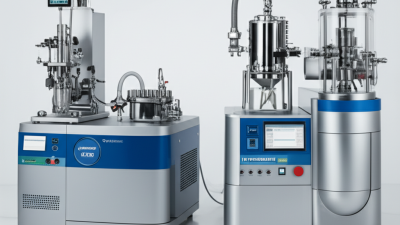
You know, the pharma industry has really made some big leaps in production tech lately, all aimed at making products better and more efficient. One of the standout tools in this whole scene is the Pharmaceutical Homogenizer Machine. It might sound fancy, but honestly, it's pretty much a hero when it comes to formulating medicines. I came across a report from Research and Markets that says the global market for these homogenizers is set to grow quite a bit, mainly because there's a rising demand for top-notch pharma products and new ways to develop drugs. These machines are pretty much essential for getting particles just right and keeping emulsions stable—both of which are key for making sure medicines work effectively.
And on top of that, the FDA keeps stressing how important it is to stick to Good Manufacturing Practices, or GMP for short. Using a Pharmaceutical Homogenizer Machine helps make sure your manufacturing process ticks all those boxes. That’s a big deal because it means better product quality and safer meds for patients. Plus, these machines can improve how well active ingredients dissolve and become bioavailable—which ties in nicely with the whole personalized medicine trend that’s been gaining ground. As the pharma world keeps changing and moving forward, jumping on advanced homogenizer tech seems like a smart move to stay ahead of the game and stand out in the market.

Overview of Pharmaceutical Homogenizer Machines
Pharmaceutical homogenizer machines play a crucial role in the production process, ensuring the consistent quality and stability of pharmaceutical products. These machines are designed to reduce particle size and improve the uniformity of drug formulations, which is essential for both efficacy and safety. According to a report by MarketsandMarkets, the global pharmaceutical homogenizers market is projected to reach USD 652 million by 2025, growing at a CAGR of 8.4% from 2020. This growth is largely attributed to the increasing demand for high-quality medications and the rising need for precision in drug manufacturing.
The mechanics of pharmaceutical homogenizers typically involve high shear and pressure forces that break down particles, emulsifying both liquid and semi-solid formulations. The effectiveness of these machines can significantly impact the bioavailability of medications, allowing for better absorption in the body. A study published in the International Journal of Pharmaceutics highlights that size reduction through homogenization enhances dissolution rates, which is particularly critical for poorly soluble drugs. With an ever-increasing focus on personalized medicine, the ability to produce formulations tailored to specific patient needs further emphasizes the importance of advanced homogenization techniques in pharmaceuticals.
Key Components of Pharmaceutical Homogenizer Machines
Pharmaceutical homogenizer machines play a crucial role in the production of consistent and high-quality pharmaceutical products. The key components of these machines include the homogenizing chamber, rotor-stator assembly, motor drive, and the control system. Each component is designed to work harmoniously, ensuring that the formulation is uniformly mixed and emulsified.
The homogenizing chamber is where the magic happens, facilitating the process of applying high shear forces to the mixture, which breaks down particles to create a stable emulsion or suspension.
In addition to the primary components, proper maintenance of the homogenizer is vital for optimal performance. Tips for maintaining the machine include regularly checking for wear and tear on the rotor-stator assembly, ensuring the seals are intact, and cleaning the homogenizer after each use to prevent cross-contamination. Regular calibration of the control system is also essential to maintain precision in operation.
Moreover, the selection of materials for construction is significant, as pharmaceutical products often require stringent standards for cleanliness and resistance to corrosion. Stainless steel is commonly used due to its durability and ease of cleaning. By understanding these key components and their functions, manufacturers can enhance the efficiency and reliability of their production processes, ultimately improving product quality.
Mechanisms of Action in Homogenization Processes
Homogenization is a critical process in the pharmaceutical industry, crucial for achieving uniformity in product formulations. Pharmaceutical homogenizer machines operate using various mechanisms that enhance the stability and efficacy of drug products. The homogenization process typically involves the reduction of particle size, which can be achieved through mechanical shear, cavitation, or a combination of both.
Mechanical shear is generated by forcing the formulation through small orifices, while cavitation occurs when rapid pressure changes create bubbles that collapse violently, leading to further size reduction. This dual action significantly improves the bioavailability of active pharmaceutical ingredients, ensuring that they are more effectively absorbed in the body.
According to a report by MarketsandMarkets, the global pharmaceutical homogenizers market is projected to reach approximately $530 million by 2025, reflecting a CAGR of 6.2% from 2020. The efficiency of homogenization contributes to this growth, particularly as it aids in developing complex formulations such as emulsions and suspensions that require consistent particle size distribution.
Enhanced product stability achieved through homogenization minimizes the risk of sedimentation and separation, which are common challenges in pharmaceutical manufacturing. Moreover, advancements in technology have led to the development of high-pressure homogenizers that operate at pressures exceeding 2000 bar, further optimizing the homogenization process and ensuring high product quality across diverse applications.
Benefits of Using Homogenizers in Pharmaceutical Production
Homogenizers play a crucial role in pharmaceutical production by ensuring the uniformity and consistency of formulations.
These machines function by reducing the particle size of substances and distributing them evenly throughout a solution.
This process is particularly important in the creation of emulsions, suspensions, and other mixtures that require a homogenous composition.
By achieving this level of consistency, homogenizers help improve the stability and efficacy of pharmaceutical products, which ultimately enhances patient safety and treatment outcomes.
Moreover, the use of homogenizers can significantly enhance production efficiency.
Their ability to blend ingredients thoroughly allows for shorter processing times and reduces the likelihood of batch variations.
This not only streamlines manufacturing processes but also minimizes waste, as consistent mixtures are less likely to require reprocessing.
Additionally, homogenizers contribute to quality control by providing reliable and repeatable results, which are essential for meeting regulatory standards in the pharmaceutical industry.
Overall, the advantages of employing homogenizers extend beyond mere production; they foster a more reliable and effective approach to pharmaceutical formulation and manufacturing.
Applications of Homogenization in Drug Manufacturing
Homogenization plays a crucial role in drug manufacturing, ensuring uniformity and stability of pharmaceutical products. The process involves breaking down particles to create a consistent mix, which is critical in delivering accurate dosages and enhancing the bioavailability of active pharmaceutical ingredients (APIs). According to a report by Grand View Research, the global market for pharmaceutical homogenizers is expected to reach USD 404 million by 2025, driven by the increasing demand for high-quality drug formulations and the growing prevalence of chronic diseases.
One of the primary applications of homogenization in drug manufacturing is in the creation of emulsions and suspensions, which are vital in the formulation of many medications. By utilizing homogenizer machines, manufacturers can significantly reduce the particle size of the API, thus preventing aggregation and improving solubility. Moreover, a study published in the International Journal of Pharmaceutics highlighted that reducing the droplet size in emulsions can enhance the pharmacokinetics of hydrophobic drugs, facilitating better absorption and therapeutic efficacy. This property is especially important in the production of parenteral and intravenous formulations, where precision is paramount.
Additionally, homogenization is essential in the production of liposomal formulations, which are increasingly used in targeted drug delivery systems. These nano-sized carriers encapsulate drugs, improving stability and enhancing therapeutic outcomes. According to data from Research and Markets, the liposomal drug delivery market is projected to grow significantly, with homogenized systems being at the forefront of this transformation. This underscores the importance of pharmaceutical homogenizer machines, as they not only optimize production processes but also pave the way for innovative drug formulations that meet the demands of modern healthcare.
Comparative Analysis of Homogenizer Types
When comparing different types of pharmaceutical homogenizer machines, it’s essential to understand their unique features and benefits.
High-pressure homogenizers are well-regarded for their ability to generate extremely fine emulsions and suspensions.
According to a 2022 market report from Research and Markets, these machines are particularly effective in reducing particle size to the nanometer range, which is critical in enhancing bioavailability and stability in drug formulations.
This precision makes them ideal for the pharmaceutical industry, where consistency and quality are paramount.
On the other hand, ultrasonic homogenizers utilize high-frequency sound waves to disperse particles.
This method is effective for smaller batch sizes and can offer quick processing times.
A comparative analysis published in the International Journal of Pharmaceutics highlights that while ultrasonic homogenizers may not achieve the same extent of particle size reduction as high-pressure counterparts, they are favored in applications requiring high energy input with minimal thermal effects, making them suitable for sensitive biological materials.
Tip: When selecting a homogenizer, consider the type of product being processed and the desired characteristics, such as viscosity and stability.
Performing a small-scale trial can provide crucial insights into which homogenizer type best suits your production goals.
Tip: Regular maintenance of homogenizer machines is vital. Ensuring that components are clean and well-functioning can prolong equipment life and maintain quality during production processes.
Future Trends in Pharmaceutical Homogenization Technology
The future of pharmaceutical homogenization technology is poised for significant advancements as the industry adapts to the evolving demands for efficiency, precision, and safety. One prominent trend is the integration of automated systems and artificial intelligence into homogenization processes. These innovations will not only optimize the operation of homogenizers but also enhance the consistency and quality of formulations. By utilizing real-time data analytics, manufacturers can monitor critical parameters, ensuring that products meet stringent regulatory requirements while reducing waste and operational costs.
Additionally, the push towards sustainable practices is influencing the design of homogenization equipment. Future machines are likely to feature energy-efficient technologies and environmentally friendly materials, reflecting the pharmaceutical industry's commitment to sustainability. Moreover, developments in microfluidics are creating opportunities for the production of smaller batch sizes with high precision, catering to personalized medicine trends. This allows manufacturers to meet specific patient needs while maintaining high quality standards, ultimately transforming the landscape of pharmaceutical production. As these trends emerge, the industry will continue to focus on innovative solutions that enhance the efficacy and safety of pharmaceutical products.
FAQS
: The primary function of pharmaceutical homogenizer machines is to reduce particle size and improve the uniformity of drug formulations, ensuring consistent quality and stability of pharmaceutical products.
Pharmaceutical homogenizers enhance the bioavailability of medications by breaking down particles, which allows for better absorption in the body and improves dissolution rates, particularly for poorly soluble drugs.
The key components of pharmaceutical homogenizer machines include the homogenizing chamber, rotor-stator assembly, motor drive, and control system, all designed to work together for effective emulsification and mixing.
Proper maintenance is vital for optimal performance, as it helps avoid wear and tear, prevents cross-contamination, and ensures precise operation through regular calibration and cleaning.
Stainless steel is commonly used for constructing pharmaceutical homogenizers due to its durability, resistance to corrosion, and ease of cleaning, which are essential for maintaining stringent cleanliness standards.
Homogenizers enhance production efficiency by thoroughly blending ingredients, which reduces processing times, minimizes batch variations, and decreases waste associated with reprocessing inconsistent mixtures.
By ensuring uniformity and consistency in formulations, homogenizers help improve the stability and efficacy of pharmaceutical products, which ultimately enhances patient safety and treatment outcomes.
Homogenizers contribute to quality control by providing reliable and repeatable results, which are essential for meeting regulatory standards and ensuring the high quality of pharmaceutical products.
The homogenization process reduces particle size and evenly distributes substances throughout a solution, ensuring a homogenous composition that is crucial for creating stable emulsions and suspensions.
The increasing demand for high-quality medications and the need for precision in drug manufacturing are driving the growth of the pharmaceutical homogenizers market, as these machines play a critical role in producing effective and safe pharmaceutical products.
Conclusion
Pharmaceutical Homogenizer Machines play a critical role in the production of pharmaceuticals by ensuring uniformity and stability in drug formulations. These machines utilize specific mechanisms to achieve effective homogenization, contributing to the quality and efficacy of pharmaceutical products. Key components of these machines, such as high-pressure systems and rotor-stator assemblies, enhance the mixing process, leading to improved bioavailability of drugs.
The benefits of using Pharmaceutical Homogenizer Machines are multifaceted, including increased product consistency, reduced particle size, and enhanced solubility. Their applications extend across various drug manufacturing processes, making them essential for producing emulsions, suspensions, and creams. A comparative analysis of different homogenizer types reveals advancements in technology, highlighting trends towards increased efficiency and sustainable practices in pharmaceutical homogenization, which are set to shape the future of the industry.