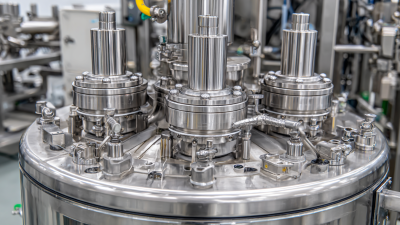
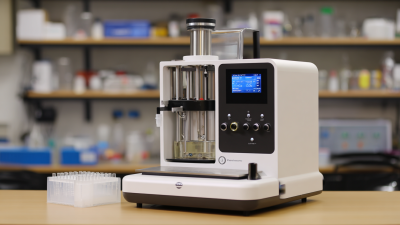
When you think about both lab work and industrial stuff, the uses of a homogenizer are pretty extensive and really impactful. Basically, a homogenizer is a must-have piece of equipment that helps mix things up really well—breaking down particles and making sure everything's evenly spread out. That’s why it’s such a go-to tool in so many fields, whether you're into pharmaceuticals, making food, developing cosmetics, or working with materials science.
One of the main reasons people use homogenizers is for creating stable emulsions and suspensions, which need to have a consistent texture to work well. In labs, scientists depend on these devices to prepare samples so that everything’s mixed properly—getting accurate results is key. On the flip side, in the food and beverage world, homogenizers are behind those super smooth sauces, dressings, and other goodies. Plus, they help extend shelf life, which is a pretty big deal.
They’re also pretty great at extracting valuable compounds, opening doors to new and innovative products. Getting a grasp on the many ways homogenizers are used can really help professionals optimize their processes, boost product quality, and work more efficiently. As we dig into these uses a bit more, it’s clear just how crucial homogenizers are for keeping things consistent and driving progress across various industries.

Understanding the Basics of Homogenizers in Laboratories and Industries
Homogenizers play a crucial role in both laboratory and industrial settings, facilitating the mixing, emulsification, and dispersion of various substances.
In laboratories, these devices are essential for creating uniform samples, particularly in applications involving biological materials, pharmaceuticals, and food products. By utilizing high shear forces, homogenizers achieve a consistent particle size, which is vital for accurate experimental results. This standardization not only enhances the reproducibility of experiments but also ensures the stability of formulations over time.
In industrial applications, homogenizers are indispensable for processes that require the blending of immiscible liquids, such as oil and water, to create stable emulsions.
They are widely used in the production of creams, sauces, and specialized coatings. The efficiency of a homogenizer allows for the reduction of production time and costs while improving the quality of the final products.
Understanding the operation principles and the specific applications of homogenizers enables laboratories and industries to optimize their processes, resulting in higher quality outputs and greater efficiency in production workflows.
Key Applications of Homogenizers in Pharmaceutical Manufacturing
Homogenizers play a pivotal role in the pharmaceutical manufacturing industry by ensuring uniformity and consistency in formulations. These devices are essential for processes such as emulsification, dispersion, and particle size reduction, which are critical for drug efficacy and stability. According to a report by ResearchAndMarkets, the global homogenizers market in the pharmaceutical industry is expected to reach approximately $500 million by 2025, indicating a growing reliance on this technology for high-quality drug production.
One of the key applications of homogenizers in pharmaceutical manufacturing is the preparation of emulsions and suspensions, where active ingredients must be evenly distributed. This uniformity is vital not only for product effectiveness but also for maintaining regulatory compliance. Studies have shown that particle sizes can influence the absorption rates of drugs, making homogenizers crucial for optimizing bioavailability. With advancements in technology, modern homogenizers are equipped with features that allow for precise control over process parameters, enhancing reproducibility and product quality.
**Tips:** When selecting a homogenizer for pharmaceutical applications, consider factors such as the material compatibility, ease of cleaning, and scalability of the equipment. Regular maintenance is also essential to ensure optimal performance and minimize contamination risks. Additionally, conducting small-scale trials can help in determining the most effective homogenization settings before full-scale production.
Top Uses of Homogenizer You Should Know for Your Laboratory and Industry - Key Applications of Homogenizers in Pharmaceutical Manufacturing
| Application |
Description |
Importance in Pharma |
Operating Principle |
| Cell Disruption |
Breaking down cells to release intracellular components. |
Essential for extracting active pharmaceutical ingredients. |
Mechanical shearing and cavitation. |
| Emulsification |
Creating stable mixtures of oil and water. |
Improves bioavailability of lipophilic drugs. |
High shear force to disperse droplets. |
| Particle Size Reduction |
Decreasing the size of solid particles in suspensions. |
Enhances the solubility and absorption of drugs. |
Cavitation and shear mixing techniques. |
| Homogenization of Creams and Ointments |
Achieving a uniform texture and consistency. |
Ensures patient safety and product efficacy. |
Mechanical mixing with high pressure. |
| Vaccine Production |
Formulating and stabilizing vaccine components. |
Critical for vaccine effectiveness and stability. |
Shear forces and turbulence for mixing. |
Role of Homogenizers in Food and Beverage Processing
Homogenizers play a crucial role in the food and beverage industry by ensuring the consistent quality and stability of products. These machines are designed to reduce the size of particles in liquids, allowing for a uniform mixture that enhances texture and flavor. According to industry reports, the global homogenizer market is projected to reach USD 950 million by 2025, driven by the increasing demand for processed foods and beverages. The effectiveness of homogenizers in creating stable emulsions is pivotal in products such as sauces, dressings, and dairy items, where separation is a common issue.
In food processing, homogenizers serve not only to enhance product quality but also to improve efficiency. By reducing particle size, these machines facilitate better heat transfer during pasteurization, contributing to a decrease in processing time and energy consumption. A study highlighted in the Journal of Food Engineering noted that using high-pressure homogenization can improve the shelf life of products by minimizing microbial growth and oxidation. This is particularly important in the beverage sector, where consumer preferences increasingly lean towards clean-label products that maintain nutritional value and natural ingredients. As such, the role of homogenizers is becoming more vital in meeting both consumer demands and regulatory standards in food safety.
Importance of Homogenization in Biotechnology and Research
Homogenization plays a critical role in biotechnology and research, serving as an essential process across various applications. In laboratories, homogenizers are used to achieve uniformity in sample preparation, which is vital for accurate experimentation and reproducibility of results. The process ensures that cellular components are evenly distributed, providing researchers with consistent data that can lead to reliable conclusions. This consistency is particularly important in fields such as molecular biology and biochemistry, where even minor variations in sample composition can significantly impact experimental outcomes.
In industry, homogenization extends its importance to the production of pharmaceuticals, food products, and cosmetic formulations. The ability to produce a homogeneous mixture is crucial for both safety and efficacy. For instance, in drug formulation, a well-homogenized product can enhance bioavailability, ensuring that active ingredients are uniformly dispersed and can be effectively absorbed by the body. Additionally, in the food industry, homogenization improves texture and stability, leading to better consumer experiences. The use of homogenizers thus not only optimizes product quality but also supports innovation in creating new formulations tailored to specific needs.
Homogenizers in Cosmetics Production: Enhancing Product Quality
Homogenizers play a pivotal role in the cosmetics industry, particularly in enhancing product quality and ensuring uniformity. The use of homogenizers in formulating creams, lotions, and emulsions helps in breaking down particles to a microscale, leading to a smoother texture and improved stability of cosmetic products. According to a report by Research and Markets, the global homogenizing equipment market in the cosmetics sector is projected to grow significantly, with an expected CAGR of 6.5% from 2021 to 2026. This growth is driven by the increasing demand for high-quality cosmetic formulations and the rising consumer expectation for consistency in product performance.
The effectiveness of homogenizers in cosmetics production not only improves the aesthetic qualities of products but also enhances their efficacy. For example, a properly homogenized emulsion can ensure even distribution of active ingredients, leading to better absorption and effectiveness upon application. Studies indicate that products that utilize homogenization techniques exhibit up to 30% improvement in active ingredient delivery compared to those that do not utilize these methods. As manufacturers increasingly focus on achieving high performance and sensory attributes in their products, the integration of homogenization technology becomes imperative, reinforcing its importance in the cosmetic formulation landscape.
Environmental and Sustainability Considerations of Homogenization Processes
Homogenization is a critical process in various laboratory and industrial settings, primarily aimed at producing uniform mixtures or emulsions. However, as industries shift towards more sustainable practices, it is essential to consider the environmental impact of homogenization processes. According to a report from the International Institute for Sustainable Development, homogenization can consume a significant amount of energy and resources, often leading to a higher carbon footprint. Data indicates that energy-efficient homogenizers can reduce energy consumption by up to 30%, contributing positively to sustainability efforts.
In addition to energy consumption, homogenization processes can also generate waste, particularly in food and pharmaceutical industries. A study published in the Journal of Cleaner Production highlighted that optimizing homogenization parameters can minimize waste generation while maintaining product quality. Implementing such sustainable practices not only helps reduce environmental harm but also enhances operational efficiency. As regulatory pressures and consumer awareness regarding environmental issues continue to rise, adopting sustainable homogenization techniques becomes imperative for industries aiming to remain competitive and responsible.
Comparing Types of Homogenizers: Choosing the Right One for Your Needs
When it comes to selecting the right homogenizer for laboratory and industrial applications, it is essential to understand the various types available and their unique functionalities. The most common types of homogenizers include mechanical, ultrasonic, and high-pressure homogenizers, each tailored to specific processes and material consistencies. Mechanical homogenizers, often employed for less viscous samples, use a blade or rotor system to achieve uniformity, making them a popular choice in food and beverage industries. In contrast, ultrasonic homogenizers utilize high-frequency sound waves to create cavitation bubbles, suitable for applications requiring the breaking down of tough cells or particles, making them ideal for biological samples.
On the other hand, high-pressure homogenizers are known for their ability to achieve a fine dispersion through intense pressure, which can be crucial for pharmaceuticals and advanced materials. When choosing a homogenizer, users should consider factors such as sample volume, viscosity, and the desired particle size reduction. Additionally, the ease of cleaning and maintenance can play a significant role in the decision-making process, especially in environments where cross-contamination must be minimized. By understanding the strengths and applications of each type of homogenizer, professionals can make informed choices that align with their specific needs and ensure optimal results in their projects.
Top Uses of Homogenizers in Laboratories and Industries
FAQS
: Homogenization is critical in biotechnology and research as it ensures uniformity in sample preparation, which is essential for accurate experimentation and reproducibility of results.
Consistency is crucial because even minor variations in sample composition can significantly affect experimental outcomes, influencing the reliability of conclusions drawn from research.
In pharmaceutical production, homogenization enhances bioavailability by ensuring that active ingredients are uniformly dispersed, facilitating better absorption by the body.
Homogenization improves the texture and stability of food products, contributing to better consumer experiences and overall product quality.
Homogenizers enhance product quality in cosmetics by breaking down particles to a microscale, leading to smoother textures, better stability, and improved efficacy of formulations.
The global homogenizing equipment market in the cosmetics sector is projected to grow significantly, with an expected compound annual growth rate (CAGR) of 6.5% from 2021 to 2026.
Properly homogenized emulsions ensure even distribution of active ingredients, which can result in up to a 30% improvement in ingredient delivery compared to non-homogenized products.
The integration of homogenization technology is essential for achieving high performance and sensory attributes in cosmetic products, aligning with rising consumer expectations for consistency and quality.
Conclusion
The article "Top Uses of Homogenizer You Should Know for Your Laboratory and Industry" provides a comprehensive overview of the essential roles homogenizers play across various sectors. It begins by explaining the fundamentals of homogenizers, highlighting their significance in both laboratory and industrial settings. Key applications are illustrated, particularly in pharmaceutical manufacturing where homogenizers ensure consistent product formulation, and in food and beverage processing where they improve texture and stability.
Moreover, the article delves into the importance of homogenization in biotechnology and research, emphasizing its role in achieving uniform particle size and enhancing experimental results. In cosmetics production, homogenizers contribute to product quality by ensuring a smooth and consistent emulsification process. Additionally, environmental and sustainability considerations are discussed, addressing the impact of homogenization processes on resource usage. Finally, the article guides readers on comparing different types of homogenizers, helping them choose the right one for their specific needs, reinforcing the diverse and critical Uses of Homogenizer in modern industries.