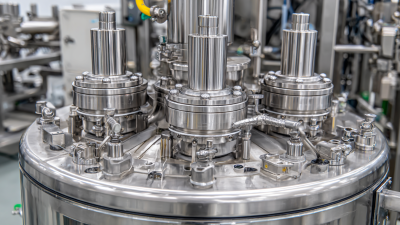
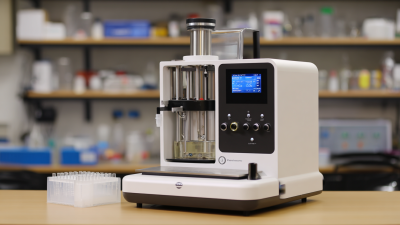
In today's world of modern processing, the High Pressure Homogenizer really stands out as an essential tool. It plays a big role in making sure products meet those tight quality standards everyone’s after. Industries like food and drinks, as well as pharmaceuticals, depend on it pretty heavily. This guide is here to help buyers around the globe figure out how to pick the right one without pulling their hair out.
Honestly, choosing the perfect High Pressure Homogenizer can feel pretty overwhelming at first. With so many models and specs out there, it’s super important to really get what your specific needs are. Looking at what other folks are saying or getting advice from experts can definitely point you in the right direction. Don't forget to think about things like what materials you'll be working with, how much you need it to handle at once, and how energy-efficient it is.
But here’s the thing—there’s no magic one-size-fits-all approach. Every application has its own quirks and requirements, and what works great for one setup might totally flop for another. So, take a step back and think about your production goals and any particular challenges you're facing. That kind of awareness will help you pick the best equipment that really fits what you need.
High pressure homogenizers play a crucial role in various industries. These devices create emulsions, suspensions, and particle size reduction in food, pharmaceuticals, and cosmetic applications. Their ability to process materials under high pressure leads to improved product stability and consistency. According to recent industry reports, the global market for high pressure homogenizers is projected to grow significantly over the next five years, driven by increased demand for processed products.
In the food industry, high pressure homogenizers are used to achieve a uniform texture in dairy products and sauces. This technology enhances flavors and extends shelf life. In pharmaceuticals, the precise control of particle size is vital for drug effectiveness. Manufacturers use these systems to ensure optimal delivery and absorption rates. Reports suggest that about 40% of pharmaceuticals require particle size reduction for improved bioavailability.
Tips: Regular maintenance of homogenizers is essential for efficiency. Ensure that seals and valves are checked frequently. Operators should be trained to recognize anomalies in operation. Monitoring these aspects can prevent costly downtimes.
Not every application benefits from high pressure homogenization. Some materials may not respond well to the process, presenting challenges. Adjusting pressure and flow rates is necessary. Overall, understanding the material characteristics is critical for success.
When selecting a high-pressure homogenizer, several key features should be considered to ensure optimal performance and efficiency. Firstly, the pressure range is essential. Many high-quality homogenizers operate between 5,000 to 30,000 psi. This range is crucial for achieving the desired emulsion stability and particle size reduction, which are vital in industries like food and pharmaceuticals.
Another important factor is the material construction. Stainless steel components are preferred for their durability and resistance to corrosion. A study by Market Research Future indicates that the global homogenizer market is projected to reach over $1 billion by 2025. This growth reflects the increasing demand for efficient processing equipment across various sectors.
The design of the homogenizing chamber should also be looked at closely. A well-designed chamber minimizes turbulence and allows for better control during processing. Additionally, energy consumption is an important aspect. Energy-efficient models can significantly reduce operational costs over time. Investing in a reliable and efficient homogenizer not only improves production but also enhances product quality.
High pressure homogenizers are essential tools in various industries, especially in food, pharmaceuticals, and cosmetics. These devices effectively emulsify, disperse, and reduce particle size in liquids. Their functionality is crucial in enhancing product stability and texture.
There are several types of high pressure homogenizers available in the market. The most common are piston homogenizers and valve homogenizers. Piston homogenizers are known for their ability to maintain consistent pressure, which is vital for uniform processing. According to a recent report, the global market for high-pressure homogenizers is expected to grow at a CAGR of over 6% from 2023 to 2030. This growth highlights the increasing demand from sectors such as dairy and beverage.
Valve homogenizers, on the other hand, provide a different mechanism. They use a narrow gap and high shear to produce fine emulsions. Research indicates that these devices can achieve particle sizes as small as 200 nanometers. However, the choice between these types depends on specific applications. Some users find it challenging to maintain consistency in smaller batches, leading to variability in product quality. Each type has its pros and cons, and understanding these helps in selecting the right homogenizer for specific needs.
| Type | Pressure Range (bar) | Flow Rate (L/h) | Application | Maintenance Frequency |
|---|---|---|---|---|
| Batch Homogenizers | 50 - 3000 | 5 - 30 | Dairy, Pharmaceuticals | Every 6 months |
| Continuous Homogenizers | 100 - 4000 | 30 - 100 | Food and Beverages | Every 3 months |
| Microfluidics Homogenizers | 10 - 2000 | 1 - 5 | Nanotechnology, Cosmetics | Every year |
| Laboratory Homogenizers | 50 - 2500 | 0.1 - 20 | Research, Analysis | As needed |
High pressure homogenizers (HPHs) play a vital role in various industries, including food, pharmaceuticals, and cosmetics. These machines improve product stability and uniformity by breaking down particles at high pressures. According to a recent market analysis, the global high pressure homogenizer market is projected to grow at a CAGR of 5.6% over the next few years.
When considering top models, factors like efficiency and maintenance requirements often come into play. Certain models excel in processing food products, providing better texture and taste. However, not every model performs well under all conditions. Some users report increased wear and tear on parts, leading to higher operational costs. This highlights the need for thorough research before making a purchase.
Leading manufacturers invest heavily in technology, pushing the boundaries of homogenization. They focus on energy efficiency and reduced sound levels to meet regulatory standards. Yet, the market still faces challenges, including price fluctuations and the availability of spare parts. Buyers must weigh initial investments against long-term operational costs to ensure they choose the best high pressure homogenizer for their needs.
Maintaining a high-pressure homogenizer is crucial for optimal performance. Regular cleaning is essential. Residue buildup can affect efficiency and product quality. Always use appropriate cleaning agents. Follow the manufacturer’s guidelines for proper disassembly and reassembly, ensuring all components are thoroughly inspected.
Troubleshooting issues is also vital. Low pressure often signals blockages in the valve or line. A quick visual check can save time. Unusual noises might indicate wear in the pump or motor. Monitoring vibrations can help identify problems early. Regular maintenance checks will help prevent unexpected downtime.
Training staff on proper operation is equally important. Human error can lead to significant complications. Encourage operators to report any irregularities immediately. Developing a checklist for daily operations may enhance reliability. Consider scheduled professional maintenance to address complex issues.
When planning to acquire a high-pressure homogenizer, budgeting is crucial. The initial cost can be significant. These machines can range from several thousand to tens of thousands of dollars. Consider factors like capacity, maintenance costs, and efficiency. Also, factor in energy costs, as efficient models save money over time.
Beyond the price tag, consider additional expenses that may arise. Installation costs can vary greatly. Training operators is another essential aspect. You may need to hire experts or invest time in training your staff. This investment ensures that your team can operate the machinery effectively.
There are ongoing costs to evaluate too. Regular maintenance is key for longevity. Parts replacement must also be planned. These costs often catch buyers off guard. Creating a comprehensive budget helps avoid unexpected financial strain. Reflect on your production needs and explore various options. Making informed decisions leads to better outcomes in the long run.
The future of high-pressure homogenization technology is poised for significant advancements. According to a recent market analysis, the global high-pressure homogenizer market is expected to grow substantially, reaching $500 million by 2025. This growth is driven by a surge in demand for dairy and beverage products that require superior texture and stability.
Emerging trends indicate a shift towards energy-efficient homogenization processes. Many manufacturers are exploring alternative technologies that reduce energy consumption while maintaining optimal product quality. Moreover, automation in homogenization processes is becoming more prevalent. Enhanced automation improves precision, leading to better product consistency and lower operating costs.
However, the industry still faces challenges. Some companies struggle with the integration of new technologies into existing production lines. This adds complexity to operations and can result in temporary inefficiencies. Continuous training of personnel on new techniques is necessary to navigate these transitions smoothly. Moreover, regulatory compliance remains a significant concern, as manufacturers must adapt to stringent standards while innovating. This landscape presents both opportunities and the need for introspection within the industry.
: They emulsify, disperse, and reduce particle size in liquids. This enhances product stability and texture.
The common types are piston homogenizers and valve homogenizers. Each serves different processing needs.
They maintain consistent pressure for uniform processing. This feature is vital in producing quality products.
They use high shear in a narrow gap to create fine emulsions. Particle sizes can be as small as 200 nanometers.
Regular cleaning is essential. Use appropriate agents and follow guidelines for disassembly and inspection.
Low pressure may point to blockages. Conduct a visual check to identify and resolve the issue quickly.
Human error can lead to performance issues. Ensure operators are informed about reporting irregularities immediately.
They could be signs of wear in the pump or motor. Monitoring sounds can help identify problems early.
A daily operations checklist helps operators remember key tasks. This reduces the chance of missing crucial maintenance steps.
Complex issues may require expert attention. Scheduled maintenance can prevent unexpected downtime and extend equipment life.
High Pressure Homogenizers are essential tools widely used in various industries, including food processing, pharmaceuticals, and cosmetics, to achieve uniform particle size and stable emulsions. This article provides a comprehensive guide covering the key features to consider when selecting a High Pressure Homogenizer, such as flow rate, pressure capacity, and ease of maintenance.
Furthermore, it outlines the different types of High Pressure Homogenizers available on the market, along with maintenance and troubleshooting tips to ensure optimal performance. A cost analysis segment helps buyers effectively budget for their equipment, while insights into future trends highlight advancements in homogenization technology that could shape the industry. By understanding these aspects, global buyers can make informed decisions when investing in High Pressure Homogenizers.