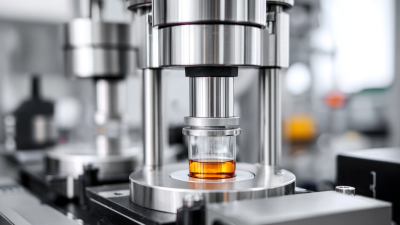
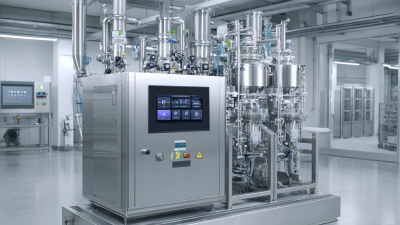
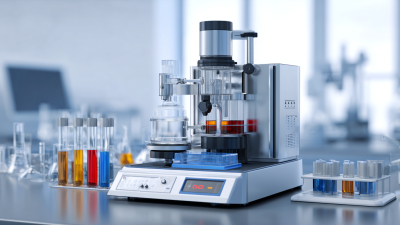
High Pressure Homogenizers are pretty essential in a bunch of industries—think food, pharma, and cosmetics. Basically, they use super intense pressure to break down particles, helping to create a mix that's both smooth and stable. The way it works is pretty interesting: it forces liquids through a tiny gap, which stirs things up and generates shear forces. This process makes the particles smaller, which is a big deal for improving product quality and extending shelf life.
But, here’s the thing—while these machines are pretty awesome, they’re not perfect. Regular maintenance is a must to avoid any unexpected breakdowns. Plus, not every material reacts the same way under pressure, so results can sometimes be a bit inconsistent. It’s really important for companies to understand their processes and what they want to achieve—knowing how these machines tick can actually help you sidestep some common problems.
Putting money into a High Pressure Homogenizer is definitely a move toward innovation. A lot of businesses see clear improvements in their product quality and happier customers because of it. That said, there’s usually a bit of a learning curve—companies often have to tweak their operations to get the most out of this tech. But honestly, embracing change like this is key if you’re looking to grow and stay competitive.

What is a High Pressure Homogenizer?
A high pressure homogenizer is an essential tool in various industries. It’s primarily used to create a stable emulsion or suspension. This device forces a mixture through a narrow gap at high pressure. The result is a uniform particle size distribution. According to industry reports, over 60% of dairy products use this technology to improve texture and stability.
The operation of a high pressure homogenizer involves several key components. These include a high-pressure pump and a homogenizing valve. The pump generates pressure, typically ranging from 500 to 2000 bar. This high pressure is crucial for breaking down fat globules and creating a smooth product. However, achieving the optimal pressure requires careful fine-tuning. Too much pressure can degrade sensitive ingredients, while too little can lead to incomplete emulsification.
Despite its advantages, homogeneity can be hard to achieve consistently. Variations in raw materials can affect the outcome. Some products may still separate over time, indicating areas for improvement. Adjusting process parameters can help, but requires ongoing monitoring. The quest for perfect emulsification continues in many production facilities. This highlights the need for a balance between efficiency and quality.
Key Components of High Pressure Homogenizers
High pressure homogenizers are essential in many industrial processes. They work by forcing materials through a narrow gap at high pressure. This process leads to significant reduction in particle size. Essential components determine how effectively these machines perform.
The pump is a key element. It generates high pressure necessary for the homogenization process. A poorly functioning pump can lead to inconsistent results. Additionally, the homogenizing valve plays a critical role. It creates turbulence, breaking down particles and droplets. If the valve is worn or damaged, efficiency decreases significantly.
Another component is the energy recovery system. It recycles energy, minimizing waste during operation. However, not all systems achieve optimal performance. Regular maintenance is vital for longevity and efficiency. Components can wear out over time, affecting the overall process. A comprehensive understanding of these components ensures better management of high pressure homogenizers.
How High Pressure Homogenizers Function Mechanically
High pressure homogenizers are essential in many industries. They create smooth emulsions and disperse particles. Their mechanical function relies on high-pressure pumps that force liquids through narrow gaps. This process creates shear forces and turbulence, effectively breaking down larger particles. According to industry reports, the efficiency of these machines can improve product stability by up to 25%.
The working principle involves two critical components: an outlet valve and a homogenizing chamber. As the liquid exits through the valve, it experiences extreme pressure. This pressure can exceed 20,000 PSI, creating micro-level mixing. The result is a uniform product with a consistent taste and texture. However, achieving optimal results can be challenging. Variations in temperature and viscosity may lead to inconsistent output.
Even with advanced technology, the operation requires constant monitoring. Operators must adjust pressure settings and flow rates meticulously. Small changes can significantly impact the final product. Companies need to invest time in training and testing for best practices. Mechanical failures also pose risks, leading to production delays. Awareness of these factors is vital for maintaining efficiency and quality in high pressure homogenization.
Performance Comparison of High Pressure Homogenizers
Applications of High Pressure Homogenizers in Industry
High pressure homogenizers play a crucial role in various industries, including food and beverage, pharmaceuticals, and cosmetics. These machines work by forcing mixtures through a narrow gap at high pressure, breaking down particles and creating a uniform product. In the food industry, this process enhances texture and mouthfeel. For instance, it creates smoother sauces and emulsions, which appeal to consumers.
In the pharmaceutical industry, high pressure homogenizers ensure consistent drug formulations. The uniformity in particle size helps improve drug absorption in the body. However, achieving perfect homogeneity can be challenging. Sometimes, a batch might have slight inconsistencies. These variations can impact the final product quality, requiring ongoing adjustments during production.
Cosmetic products also benefit greatly from this technology. Creams and lotions achieve a desirable texture and stability. Clients expect a smooth, luxurious feel. Yet, formulation errors can result in products that separate or feel greasy. Continuous process monitoring is essential to avoid these pitfalls and improve overall product reliability.
Advantages of Using High Pressure Homogenizers
High pressure homogenizers are crucial in various industries, especially in food and pharmaceuticals. They create a uniform product by breaking down particles. This process enhances texture and stability. Studies show that particle size reduction improves bioavailability. It can increase absorption rates by 25% in some cases.
The advantages of using high pressure homogenizers are numerous. For instance, they offer better product consistency. This consistency is important for customer satisfaction. A seamless texture can lead to higher sales. Furthermore, these machines can reduce emulsifier usage. Reports indicate that effective homogenization can lower emulsifier needs by up to 30%. This reduction not only decreases costs but also appeals to health-conscious consumers.
However, some challenges exist. Maintaining equipment is essential. If not regularly serviced, performance may decrease. Additionally, the upfront cost can be significant for small businesses. Owners should weigh these considerations carefully. Investing in high pressure homogenizers requires thoughtful planning and reflection on long-term benefits versus initial expenses.
Maintenance and Care for High Pressure Homogenizers
High pressure homogenizers are essential in various industries. They require proper maintenance to function optimally. Regular cleaning is crucial for these machines. Built-up residues can affect performance. Using the right cleaning agents ensures longevity. Operators often overlook this step, leading to issues down the line.
Inspecting the machine regularly is vital. Check for wear and tear on components. A small crack can disrupt operations. Replace parts when necessary to avoid downtime. Often, maintenance schedules are not strictly followed. This can result in unexpected breakdowns. Keeping a checklist may help in staying on track.
Lubrication is another key aspect. It minimizes friction and enhances performance. However, too much lubricant can be just as harmful. Finding balance is essential. Operators need to be vigilant about this. It’s common to ignore these small details, which can lead to larger problems over time. Regular training and awareness can improve overall care for high pressure homogenizers.
Future Innovations in High Pressure Homogenizer Technology
High pressure homogenizers are revolutionizing various industries, especially food and pharmaceuticals. As technology evolves, future innovations promise to enhance their efficiency and adaptability. Newer models might incorporate advanced sensors. These sensors could provide real-time data on particle size and distribution, improving quality control.
Innovations may also focus on energy efficiency. As industries seek to reduce their carbon footprint, energy-saving designs are becoming crucial. One potential area is the development of hybrid systems. These systems could combine high pressure with other techniques, optimizing performance while minimizing resource use. This can lead to cost-effective production processes.
**Tip:** Always consider the environmental impact. Reducing energy consumption can save costs in the long run.
Another promising direction is automation. Automation can streamline processes, allowing for more precise control and reduced human error. However, this transition requires careful planning. Training staff to operate advanced systems is essential. Balancing technology with human oversight is vital to achieve optimal results.
**Tip:** Stay informed on upcoming technologies. Continuous learning is key in adapting to new industrial advancements.
What is a High Pressure Homogenizer and How Does It Work?
| Feature |
Description |
Application |
Future Innovations |
| Working Principle |
Uses high pressure to force liquid through a narrow gap, creating intense shear and turbulence. |
Food and beverage processing, pharmaceuticals, and cosmetics. |
Integration with IoT for data monitoring and control. |
| Pressure Range |
Can operate at pressures ranging from 100 to 3000 bar or more. |
Emulsification of creams and lotions. |
Development of energy-efficient designs reducing operational costs. |
| Maintenance |
Requires regular maintenance and monitoring to ensure optimal performance. |
Production of stable emulsions and suspensions. |
Automation and predictive maintenance to minimize downtime. |
| Benefits |
Increases product stability and shelf life, enhances texture and mouthfeel. |
Used in homogenizing milk and other dairy products. |
Emerging technologies in nanotechnology applications. |
FAQS
: It is a tool used to create stable emulsions or suspensions by forcing mixtures through a narrow gap.
It uses a high-pressure pump to force mixtures at pressures from 500 to 2000 bar, creating uniform particle sizes.
They are common in food and beverage, pharmaceuticals, and cosmetics, improving product quality and consistency.
Variations in raw materials can cause inconsistencies, leading to potential product separation over time.
It creates uniform particle sizes, which enhance bioavailability and can increase absorption rates by up to 25%.
Less emulsifier can lower costs and appeal to health-conscious consumers, making products more marketable.
It helps identify errors, like separation or greasiness in products, ensuring higher quality and consistency.
They need to evaluate the upfront costs against potential long-term benefits and impacts on product quality.
Regular servicing is essential; poor maintenance can lead to decreased performance and inconsistent product quality.
Even with advanced equipment, slight inconsistencies can still occur, indicating ongoing challenges in production processes.
Conclusion
A High Pressure Homogenizer is a crucial piece of equipment used to refine and disperse materials in various industries. Its key components include a high-pressure pump, homogenizing valve, and an energy recovery device, which work in tandem to break down particles and achieve a uniform consistency. The mechanical function involves forcing products through a narrow gap at high pressure, resulting in improved texture and stability, making it particularly valuable in food, pharmaceuticals, and biotechnology sectors.
The advantages of using High Pressure Homogenizers include enhanced product quality, increased shelf life, and the ability to process difficult formulations. Regular maintenance and care are essential to ensure optimal performance and longevity of the equipment. Looking ahead, innovations in High Pressure Homogenizer technology promise to further expand its applications and efficiency, driving advancements across multiple industries.