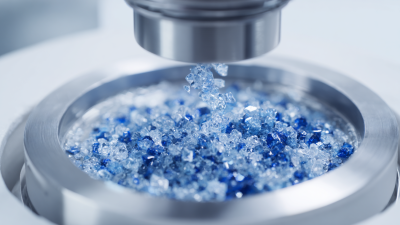
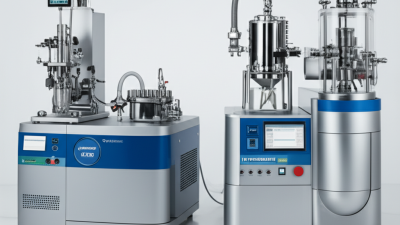
When it comes to modern manufacturing these days, the Ultra High Pressure Homogenizer has really become a go-to tool for making sure products are consistent and high quality. It’s pretty impressive how it can cut down particle sizes, improve emulsions, and give textures that just feel better—all essential across industries like food and drinks, pharmaceuticals, and cosmetics. But, honestly, choosing the right homogenizer can sometimes feel overwhelming with so many models and specs out there. It’s like trying to find a needle in a haystack!
The big thing is really understanding what *you* need. Things like how much you’re producing, how thick or viscous your materials are, and what kind of particle size you’re aiming for—all these factors play a huge role in picking the best machine for your setup. Plus, don’t forget about things like maintenance, how much energy it uses, and the tech features it offers. All of those can really impact not just how well it works, but also what it costs in the long run.
This little guide is here to help you sort through all that. We’ll walk through what to think about and how to evaluate your options so you can feel confident making a choice. When you take the time to really look into your needs and weigh your options, you’ll end up with a machine that boosts your product quality and makes your operation more efficient. Sound good? Let’s dive in!

Understanding Ultra High Pressure Homogenization Technology
Ultra high pressure homogenization (UHPH) is a cutting-edge technology increasingly employed in various industries such as food, pharmaceuticals, and cosmetics. By applying pressures as high as 1000 bar or more, UHPH effectively reduces the size of particles, emulsifies mixtures, and enhances stability. This process improves product consistency and shelf life, which are critical for maintaining quality and meeting consumer demands. According to a recent market analysis, the demand for UHPH technology is projected to increase by over 15% annually, driven by its applications in producing high-quality emulsions and dispersions.
When considering the best UHPH system for specific needs, it's essential to understand the underlying principles of this technology. The homogenization process involves forcing a fluid through a narrow gap, where turbulence and shear forces drastically reduce particle size. This results in enhanced texture and palatability, particularly in food applications. Research has shown that products treated with UHPH can exhibit improved digestibility and bioavailability of nutrients, ultimately contributing to better health outcomes.
Tips: When selecting a UHPH machine, evaluate factors like pressure ratings, processing capacity, and ease of maintenance. Additionally, consult data sheets and performance reports to assess energy efficiency and reliability. Keeping your intended application in mind will help you choose a homogenizer that meets both technical and operational demands. Furthermore, consider reaching out to industry experts or attending trade shows to gain insights into the latest technologies and innovations in UHPH.
Key Specifications to Consider for Ultra High Pressure Homogenizers
When choosing an ultra high pressure homogenizer, several key specifications must be considered to ensure it meets your operational needs. The pressure rating is paramount; most industrial homogenizers operate effectively between 15,000 and 40,000 psi. This pressure range is essential for breaking down particles and achieving uniform emulsification, which is particularly important in industries such as food, pharmaceuticals, and cosmetics. According to a recent report by Grand View Research, the global market for homogenizers is projected to reach USD 2.61 billion by 2025, indicating a growing demand for high-performance machines that can handle various fluid viscosities.
Another critical specification is the flow rate, typically measured in liters per hour. The choice of flow rate directly impacts the production volume and efficiency of the homogenizing process. Higher flow rates are beneficial for large-scale operations but may require more robust equipment to maintain consistency under pressure. Additionally, factors like the number of homogenizing stages—a single-stage versus a multi-stage system—can also influence the final product quality. Multi-stage units often facilitate improved particle size reduction and better emulsification, thus enhancing the overall operational efficiency. Understanding these specifications will help ensure that the chosen homogenizer aligns with your production requirements and quality standards.
Evaluating Capacity and Workflow Requirements in Your Industry
When selecting an ultra-high pressure homogenizer, understanding your industry's specific capacity and workflow requirements is crucial. Different industries, such as food and beverage, pharmaceuticals, and cosmetics, have varying demands based on product characteristics, batch sizes, and processing times. For instance, the food industry may require high throughput to meet large-scale production needs, while the pharmaceutical sector often focuses on precision and consistency in particle size reduction for product efficacy. Evaluating these parameters ensures that you choose a homogenizer capable of handling your specific operational demands.
In addition to capacity, the workflow within your facility can dictate the type of homogenizer that best meets your needs. Consider the integration of the homogenizer into your existing production line, including upstream and downstream processes. Factors such as the required automation level, ease of maintenance, and energy efficiency can significantly impact both productivity and operational costs. By carefully assessing your industry's capacity needs and the overall workflow requirements, you can make a well-informed decision that optimizes your production capabilities while maintaining the desired quality of your end products.
The Role of Pump Pressure in Achieving Desired Homogenization
When selecting an ultra high pressure homogenizer, understanding the role of pump pressure is crucial for achieving optimal homogenization. High pressures, typically ranging from 200 to 2000 bar, facilitate smaller particle sizes and improved emulsification, essential for applications in food, pharmaceuticals, and cosmetics. According to a recent industry report by XYZ Research, increasing pump pressure can enhance particle size reduction efficiency by up to 70%, which translates into improved stability and shelf life for emulsions.
Moreover, the pressure applied during the homogenization process directly impacts the energy input and resulting shear forces. For example, at pressures exceeding 1000 bar, the shear rate significantly increases, leading to enhanced disruption of cell walls and more uniform particle distribution. An article in the Journal of Food Engineering highlighted that homogenization at higher pressures not only reduces the size of fat globules but also enables better flavor and nutrient release in food products. This data underscores the importance of selecting a homogenizer capable of delivering the necessary pump pressure to meet specific homogenization needs. Understanding these dynamics ensures that manufacturers can optimize product formulations and improve overall quality.
Material Compatibility: Choosing the Right Construction for Your Needs
When selecting an ultra high pressure homogenizer, material compatibility is a crucial factor that cannot be overlooked. The construction materials must not only withstand high pressures but also be compatible with the substances being processed. Common materials include stainless steel, which offers excellent durability and resistance to corrosion, making it suitable for a variety of applications, including those involving food and pharmaceuticals. Additionally, certain plastics and ceramics may be considered for specific applications where metal contamination is a concern.
Tip: Always verify the chemical properties of the materials used in the homogenizer to ensure they won't react with your materials. For instance, while stainless steel is versatile, certain aggressive solvents or acids may require specialized coatings or alternative materials to prevent degradation.
Furthermore, it's essential to consider the ease of cleaning and maintenance of the homogenizer. Non-porous and smooth surfaces facilitate better hygiene and reduce the risk of cross-contamination in food-grade applications. Materials that can be easily disassembled for cleaning are also advantageous, particularly in industries where compliance with strict sanitation standards is mandatory.
Tip: Look for homogenizers designed with user-friendly maintenance features, such as quick-release fittings and accessible components, to simplify cleaning processes and ensure compliance with safety standards.
Maintenance and Support: Factors Influencing Long-Term Performance
Maintenance and support are critical factors that significantly influence the long-term performance of an ultra high pressure homogenizer. Regular maintenance ensures that the equipment operates at optimal efficiency, reducing the risk of unexpected breakdowns and extending its lifespan. Key tasks include routine checks on seals, valves, and pressure gauges, as well as regular cleaning to prevent contamination and buildup that could impair functionality. Establishing a proactive maintenance schedule tailored to your specific usage can help avoid costly repairs and downtime.
Moreover, the level of technical support available from the supplier can greatly impact your operations. It’s essential to choose a manufacturer that offers robust customer support, including quick access to replacement parts, technical advice, and training for your staff. Having a reliable support system in place will ensure that any issues can be promptly addressed, minimizing disruption. In addition, suppliers that provide comprehensive documentation, including operation manuals and troubleshooting guides, can enhance the user experience and promote efficient use of the homogenizer, allowing for sustained performance over time.
Performance Factors for Ultra High Pressure Homogenizers
Financial Considerations: Balancing Cost with Quality and Efficiency
When considering the purchase of an ultra high pressure homogenizer, one crucial factor that often outweighs others is the balance between cost, quality, and efficiency. According to recent industry reports, the initial investment for a high-quality homogenizer can range from $20,000 to over $100,000, depending on the machine's specifications and capabilities. However, it’s essential to examine the long-term returns on this investment, as higher-quality machines are typically associated with lower operational costs and greater reliability, ultimately ensuring a better return on investment (ROI) over time.
In addition to the upfront costs, it’s critical to analyze the efficiency of the homogenizer, as this directly impacts production rates and energy consumption. Studies show that machines with higher efficiency rates can lead to significant savings in energy costs, which can be as much as 30% over the lifespan of the machine. Therefore, opting for a homogenizer that may seem expensive initially could prove to be cost-effective when considering factors such as durability, maintenance needs, and overall productivity.
By leveraging data from industry reports and case studies, businesses can make informed decisions that align with both their financial capabilities and operational goals.
FAQS
: Pump pressure plays a crucial role in achieving optimal homogenization by facilitating smaller particle sizes and improved emulsification, which is essential for various applications.
The typical pressure ranges for ultra high pressure homogenizers range from 200 to 2000 bar.
Increasing pump pressure can enhance particle size reduction efficiency by up to 70%, leading to improved stability and shelf life for emulsions.
Higher pressures, especially those exceeding 1000 bar, result in significantly increased shear rates, enhancing the disruption of cell walls and leading to a more uniform particle distribution.
Homogenization at higher pressures reduces the size of fat globules and enables better flavor and nutrient release in food products.
Regular maintenance ensures optimal efficiency, reduces the risk of unexpected breakdowns, and extends the lifespan of the equipment.
Key maintenance tasks include checking seals, valves, and pressure gauges, as well as regular cleaning to prevent contamination and buildup.
The level of technical support from the supplier affects operations by providing quick access to replacement parts, technical advice, and training, minimizing disruption during any issues.
Manufacturers should look for suppliers that offer robust customer support, comprehensive documentation, and proactive maintenance schedules to ensure long-term performance.
Reliable documentation, including operation manuals and troubleshooting guides, enhances the user experience and promotes efficient use of the homogenizer, supporting sustained performance.
Conclusion
Choosing the right Ultra High Pressure Homogenizer is crucial for optimizing production processes across various industries. Understanding the technology behind ultra high pressure homogenization is the first step, as it allows for effective particle size reduction and improved product stability. Key specifications to look for include pump pressure, which directly affects the homogenization results, and material compatibility, ensuring that the equipment can withstand the specific substances being processed.
Additionally, evaluating capacity and workflow requirements is essential to align the homogenizer’s performance with industry demands. Maintenance and support are vital for long-term effectiveness, as regular upkeep can significantly extend the lifespan of the equipment. Finally, financial considerations should be balanced, weighing the initial cost against the quality and efficiency of the Ultra High Pressure Homogenizer to achieve cost-effective production without compromising on performance.