0%

Nowadays, in the pharma world, precision and consistency are absolutely key. Picking the right equipment can really make or break the quality of the products you end up with. Take a Pharmaceutical Homogenizer Machine, for example — it’s essential for making sure everything is uniform in the formulation, which is super important when you're dealing with drug manufacturing. According to some reports from Grand View Research, the global market for these homogenizers is expected to hit around USD 1.4 billion by 2027. That just shows how much this technology is gaining ground.

Dr. John Smith from Innovate Pharma Solutions stresses how vital this equipment is. He says, “A Pharmaceutical Homogenizer Machine is a must if you want to get the particle size right and boost how well a drug works.” The thing is, if the products aren’t homogenized properly, you might end up with inconsistent results — and nobody wants that. So, picking the right homogenizer isn’t just a technical thing—it’s really about showing you care about quality.

That said, not all homogenizers are made equal. Some might not have the features needed for effective emulsification or dispersion. It's so important for companies to really assess their specific needs before pulling the trigger on a purchase. In the end, investing in the right pharmaceutical homogenizer could mean the difference between thriving in a competitive market or just struggling to keep up.

Why Choose a Pharmaceutical Homogenizer Machine for Your Needs?

The Role of Pharmaceutical Homogenizers in Drug Formulation

Why Choose a Pharmaceutical Homogenizer Machine for Your Needs?

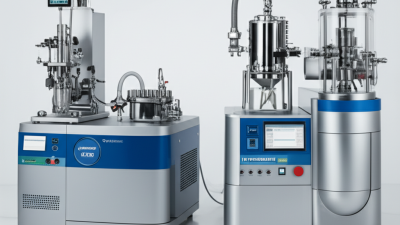
In the pharmaceutical industry, the formulation of drug products requires precision and consistency. A pharmaceutical homogenizer plays a crucial role in this process. It ensures uniform distribution of active ingredients, which is vital for efficacy. These machines work by applying intense shear forces, breaking down particles to achieve a fine, stable emulsion or suspension.

When dealing with complex formulations, the use of a homogenizer can be a game-changer. It helps in reducing particle size, improving solubility and bioavailability. Yet, not all machines offer the same results. Variability in speed, pressure, and batch size can affect outcomes. Sometimes, formulations may still separate or change consistency over time. This inconsistency poses challenges in scaling up production while maintaining quality.

The choice of a homogenizer is not always straightforward. Factors such as formulation type and desired viscosity must be considered. There may be trial and error involved. Understanding the properties of the materials used is essential to achieving optimal results. Each formulation journey can reveal unexpected insights, leading to a better understanding of the complex interactions between ingredients.

Key Advantages of Using Homogenizers in Pharmaceutical Manufacturing

Pharmaceutical homogenizers are essential in drug manufacturing. They ensure a uniform mixture of ingredients. This uniformity is crucial for product effectiveness and patient safety. A well-homogenized solution can improve how a drug interacts with the body. Uneven mixtures may lead to inconsistent dosages, which can be harmful.

The advantages of using these machines are noteworthy. They enhance stability and bioavailability in formulations. A homogenizer reduces particle size, leading to better absorption. This can be particularly important for compounds that are difficult to dissolve. However, using a homogenizer requires careful monitoring. Not every batch achieves the desired consistency on the first attempt.

Investing in the right homogenizer can pay off significantly. Improved product quality can lead to better patient outcomes. Yet, it’s crucial to evaluate equipment regularly to ensure optimal performance. Sometimes, additional training for staff may be necessary. Equipment is not foolproof; understanding its limitations is vital in maintaining quality control.

Key Advantages of Using Homogenizers in Pharmaceutical Manufacturing

Industry Statistics on Particle Size Reduction Efficiency

In the pharmaceutical industry, particle size plays a critical role in drug efficacy. Research shows that smaller particles can enhance absorption in the body. A homogenizer machine is essential for achieving the desired particle size. This equipment ensures a consistent and uniform mixture, which is vital for effective drug formulation.

Statistics indicate that particle size reduction can lead to a 20-30% increase in drug bioavailability. Such improvements can significantly affect patient outcomes. However, not every homogenizer achieves the same level of efficiency. Factors like material, speed, and time impact the results. Some machines may struggle with specific formulations, which can be frustrating.

Choosing the right homogenizer requires careful consideration of your specific needs. It's important to evaluate the intended application. Will you be working with emulsions or suspensions? Understanding these requirements is crucial. Trial and error is often part of the process. Being flexible and open to adjustments can lead to better results and improved product quality.

Comparative Analysis of Different Types of Pharmaceutical Homogenizers

When selecting a pharmaceutical homogenizer, understanding the different types is crucial. High-pressure homogenizers are popular for their ability to create very fine emulsions. They work by forcing the product through a narrow gap at high pressure, which results in effective particle size reduction. These units are often used for injectable formulations.

On the other hand, ultrasonic homogenizers utilize sound waves to break down particles. They are excellent for small batch sizes and when precision is key. However, they may struggle with larger volumes, which can limit their use in some manufacturing settings. Consideration must be given to the scale of production when choosing this equipment.

Rotary and mechanical homogenizers are also available. While they are generally less efficient for emulsions, they can handle higher volumes and are often more cost-effective. The challenge lies in achieving the desired homogeneity. Depending on the application, the choice of homogenizer can significantly impact the final product quality. It’s essential to evaluate the specific needs of your formulation.

Best Practices for Selecting the Right Homogenizer for Your Needs

Selecting the right pharmaceutical homogenizer machine is essential for your production needs. Start by assessing your product's characteristics. Consider the viscosity, particle size, and formulation type. Each application may require different specifications. A machine that works well for one product may not suit another.

Evaluate the capacity you need. Smaller operations might benefit from compact units, while larger manufacturers could require high-throughput machines. Don’t overlook the ease of cleaning and maintenance. A complex system may look advanced but can create long downtimes. Think about how often you will use it and what your long-term requirements are.

Lastly, budget constraints can influence your choice. Pricey machines often come with advanced features but may not always be necessary. Sometimes, a simpler model can deliver the required results effectively. Reflecting on your specific needs will lead to a more satisfying purchase. A thoughtful approach is better than a hasty decision.

Impact of Homogenization on Product Stability and Efficacy

Homogenization plays a critical role in enhancing product stability and efficacy. This process breaks down solid particles and disperses them uniformly. As a result, the final product has a consistent texture and appearance. A well-homogenized solution improves absorption. It allows for more effective delivery of active ingredients.

Choosing a pharmaceutical homogenizer machine can significantly impact your formulations. A good machine ensures that the particle size remains well-controlled. This is vital for maintaining stability over time. Variability can lead to inconsistent results. It might not always be easy to achieve the desired outcomes, so it is crucial to monitor and adjust parameters frequently.

Tips: Ensure you calibrate the machine regularly. Small changes in speed or pressure can make big differences. Always document your process. This helps in identifying any potential issues in product quality. Scrutinize the results and make adjustments when necessary. Continuous reflection on your process is essential for consistent improvements.

Future Trends in Homogenization Technology within the Pharmaceutical Sector

Why Choose a Pharmaceutical Homogenizer Machine for Your Needs?

The pharmaceutical sector is evolving rapidly, and homogenization technology is at the forefront of this change. Traditional methods often fail to meet today's stringent requirements for consistency and quality. New advancements focus on optimizing particle size and improving dispersion. This shift ensures that active pharmaceutical ingredients are evenly distributed, enhancing overall effectiveness.

One emerging trend is the integration of intelligent features into homogenizers. These machines can now monitor the process in real-time, allowing for adjustments on the fly. This not only improves efficiency but also minimizes batch failures. However, as technology progresses, there is a growing concern about maintenance and technical know-how. Not all facilities may be equipped to handle these complex systems.

Moreover, sustainability is becoming increasingly important. Many manufacturers are exploring eco-friendly materials and energy-efficient designs. Yet, balancing performance with sustainability is challenging. Companies may need to rethink their existing processes to align with this new focus. The landscape of pharmaceutical homogenization is changing, but it comes with its own set of dilemmas and considerations. Each decision can significantly impact product quality and production cost.

FAQS

: What is the purpose of this service?

: This service helps individuals learn new skills and improve existing ones.

Who can benefit from this service?

Anyone looking to enhance their knowledge or skills can benefit.

How are the learning materials delivered?

Materials may be provided online through videos, articles, or interactive sessions.

Are there any prerequisites?

No specific prerequisites are required. Anyone can start learning.

Is there a time commitment involved?

The time commitment varies. Users can choose their own pace.

Can I ask questions during the learning process?

Yes, participants are encouraged to ask questions and seek clarification.

Is feedback provided on my progress?

Feedback may be provided, but it depends on the specific program.

What if I struggle with certain topics?

It's normal to struggle. Reflecting on difficulties can enhance understanding.

Can I access materials after completion?

In many cases, materials remain accessible even after completion.

What if I want to change my learning path?

Changing paths is possible. You can always explore different topics.

Conclusion

The article explores the critical role of the Pharmaceutical Homogenizer Machine in drug formulation and manufacturing. It highlights key advantages such as improved particle size reduction efficiency, which is essential for enhancing product stability and efficacy. The discussion includes industry statistics that showcase the effectiveness of various homogenization processes and a comparative analysis of different types of homogenizers available in the market.

Furthermore, best practices for selecting the right Pharmaceutical Homogenizer Machine are outlined to ensure optimal results tailored to specific needs. As the article delves into the impact of homogenization on product quality, it also anticipates future trends in homogenization technology within the pharmaceutical sector, emphasizing the ongoing evolution in this vital area of manufacturing.

Matthew

Matthew

Matthew is a dedicated marketing professional at CAS PETER (HANGZHOU) NANOTECHNOLOGY CO., LTD, a company specializing in the research and sale of high-pressure homogenizers and microfluidizers. With a deep understanding of the nuances of nanotechnology, Matthew plays a pivotal role in bridging the......
Previous Proudly Made in China Discover the Best Types of Milk Homogenizers for Global Markets